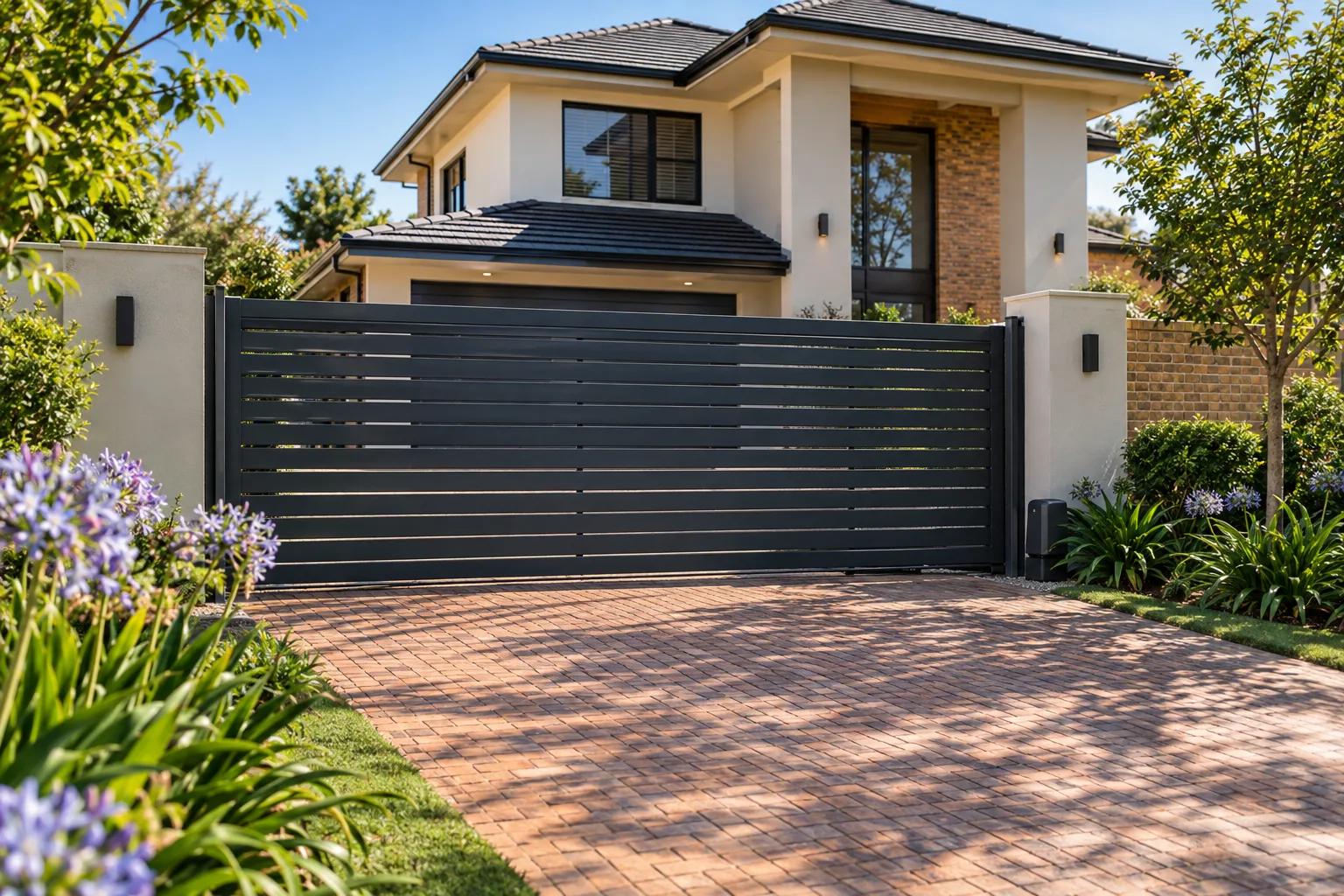

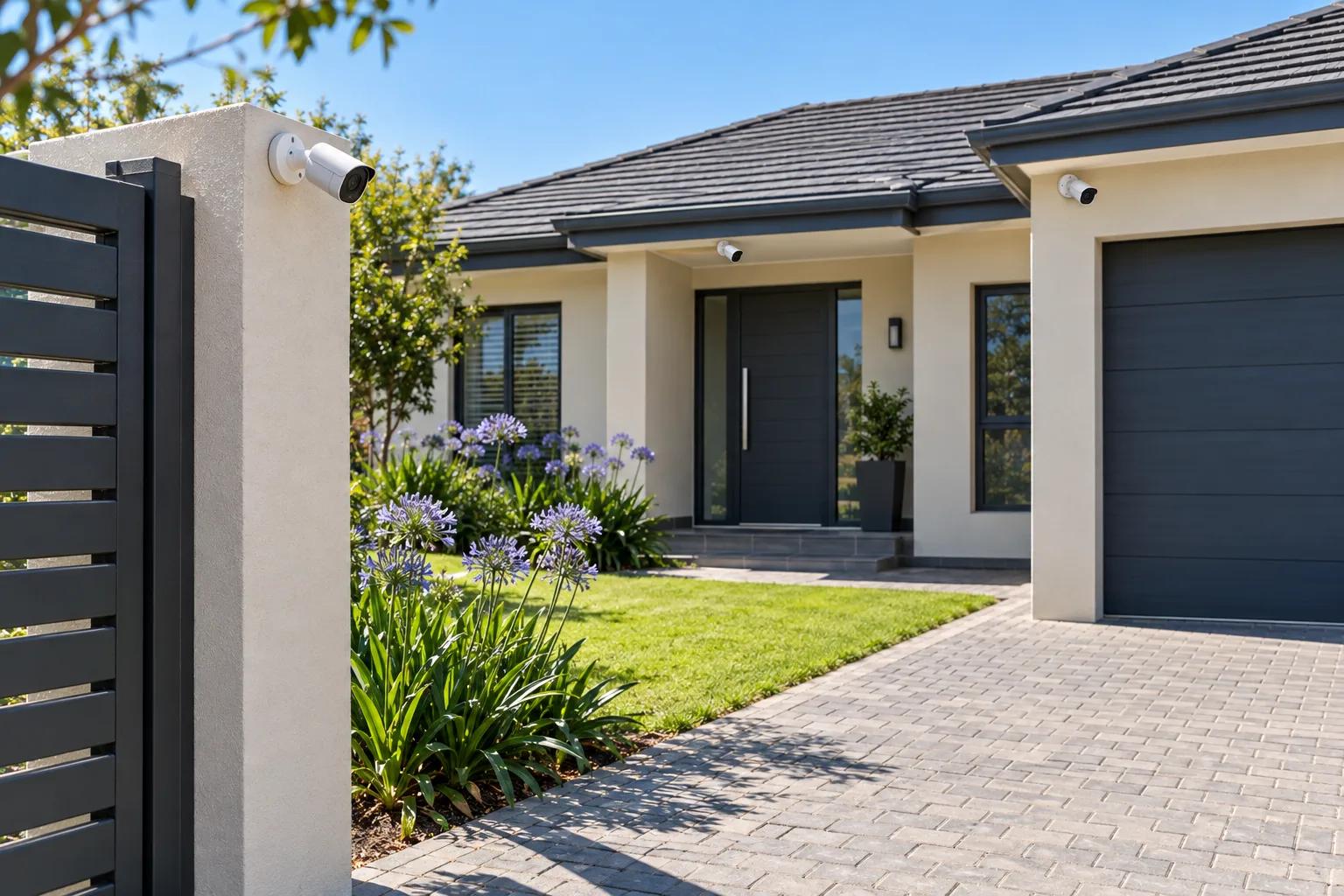
The garden service uses the side gate every Friday morning, and it's the one gate with no camera. Four cameras watch the driveway, the front door and the pool, and the side gate sits in the gap between them. Last week someone came through it at 3:15am. The recorder caught a shadow crossing the lawn and nothing else, because the number of cameras was chosen before anyone walked the boundary...
How many CCTV cameras does a property need?
A property needs one CCTV camera for every way onto it, plus one for each spot inside where you'd want a record of what happened. Size counts for less than you'd expect: a big house with one gate can need fewer cameras than a small factory with three entrances and a loading bay.
Key takeaways
- The count starts with the ways in: every gate, pedestrian gate, door, passage and loading bay gets at least one camera.
- A townhouse may need two to four cameras, a freestanding home four to eight, and an estate many more.
- One wide camera can cover an open yard where two narrow ones would leave gaps, so camera type and count are planned together.
- Inside a business, reception, the till, the stock room and the server cupboard add to the perimeter count.
- When the budget won't stretch, cover the gate and the busiest doors first, then fill in without leaving a gap between covered spots.
Count the ways in, not the square metres
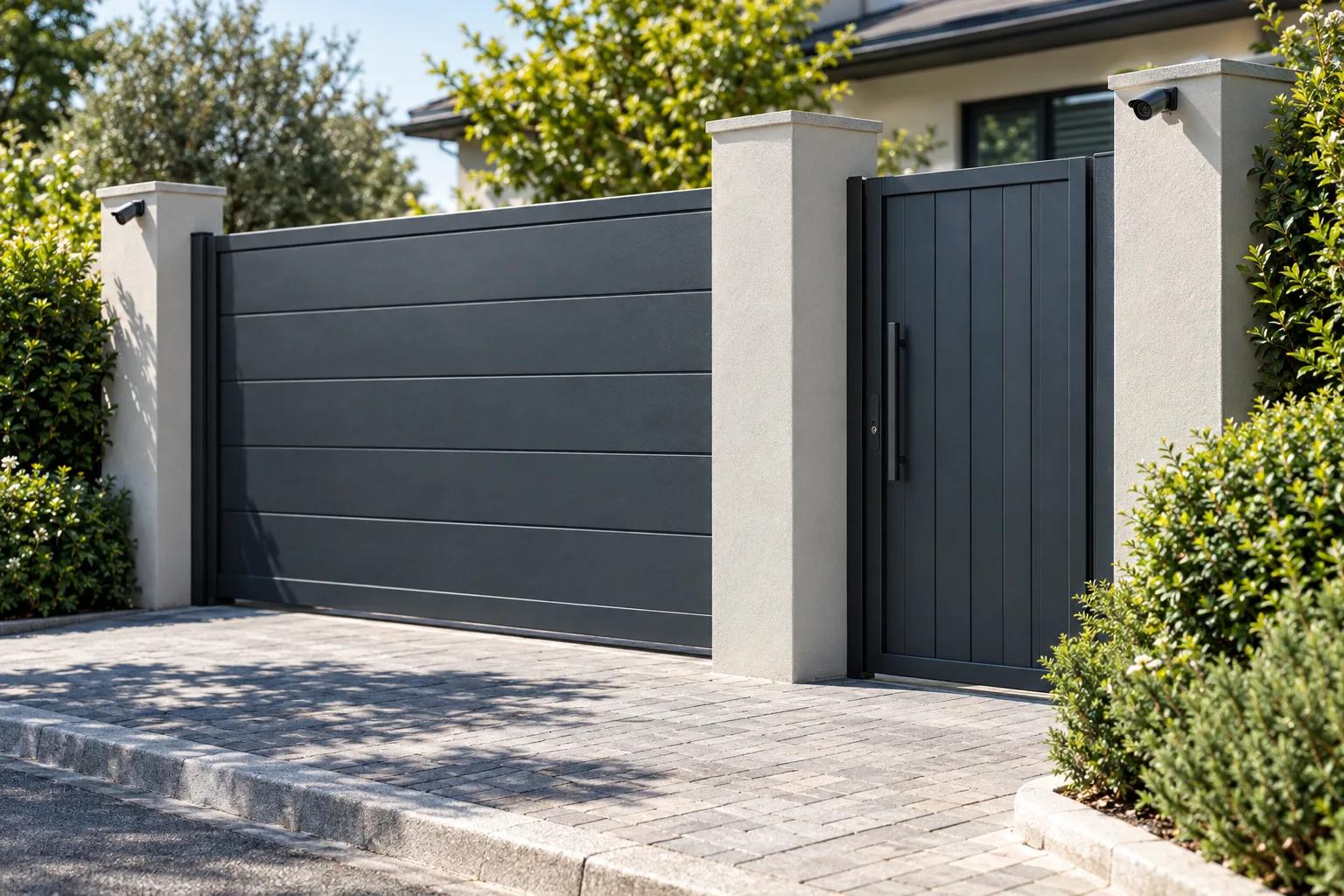
Working out how many CCTV cameras you need starts with a walk around the boundary and a list. Write down every way onto the property: the vehicle gate, the pedestrian gate beside it, any side or back gate, every outside door, each side passage and every delivery entrance.
Include the openings you hardly use. A side gate opened once a week by the garden service is still a way in, and the gate no one thought to count is often the one in the footage after a break-in. The same goes for a back door kept locked, a garage door to the street and the gate to the refuse area.
Each item on your list gets at least one camera. This is your starting count, and it's usually higher than the number people guess before they walk it. Positions inside the property and long stretches of wall or fence come on top.
Where each camera goes, and at what height, is a separate decision covered under CCTV camera placement. The count only answers how many CCTV cameras the plan needs before anyone starts drilling.
A home, a business and an estate: how the count differs
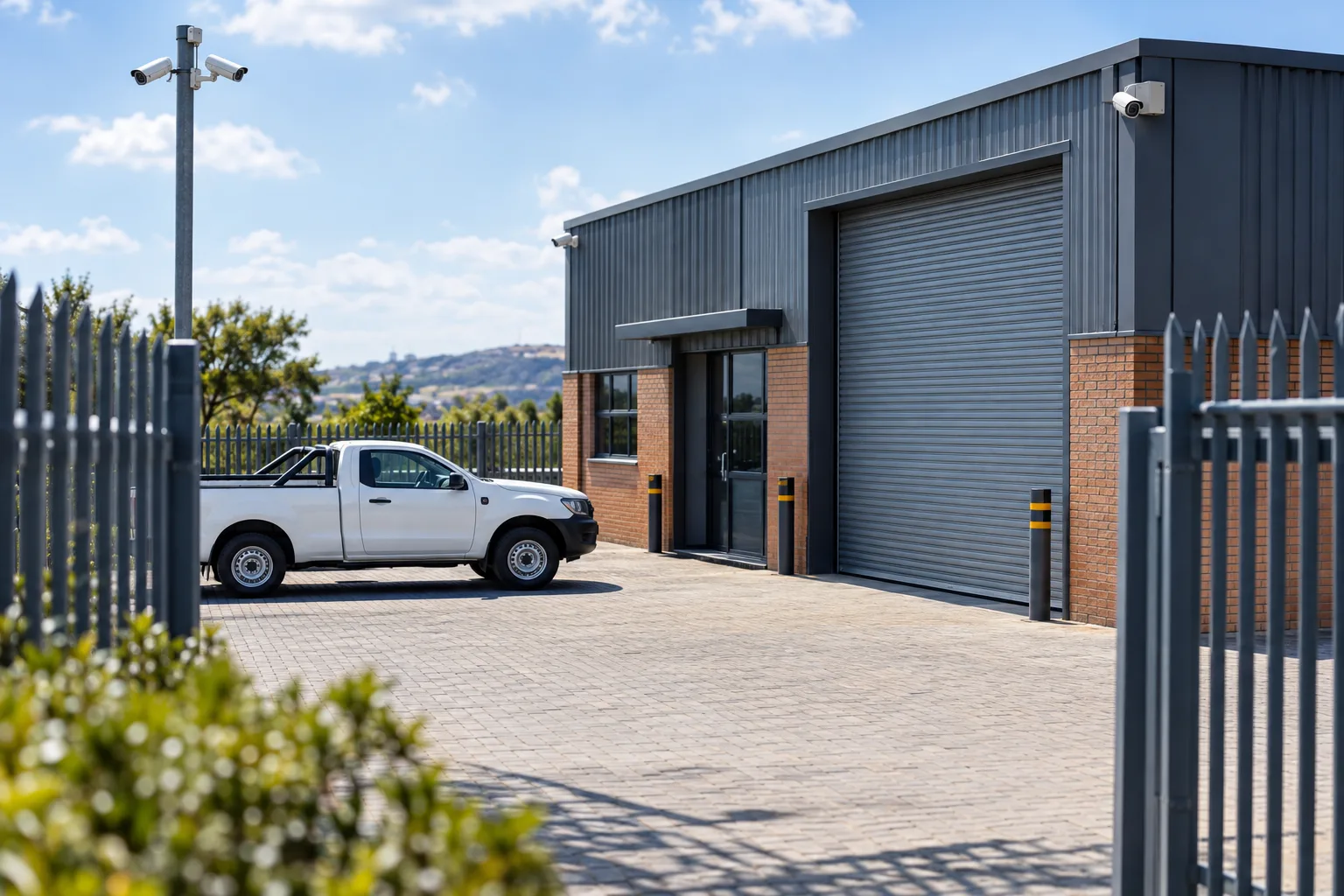
The same method gives quite different totals, because a home, a business and an estate have different numbers of ways in and different spots inside worth watching.
| Property | Ways in to count | Spots inside or on site | A typical starting point |
|---|---|---|---|
| Townhouse in a complex | Front door, back door, garage | Small garden or patio | 2 to 4 cameras |
| Freestanding home | Vehicle gate, pedestrian gate, front and back doors, side passages | Garage, back corners | 4 to 8 cameras |
| Small business or workshop | Yard gate, staff entrance, front door, loading bay | Reception, till, stock room | 6 to 10 cameras |
| Office park or factory | Several gates, booms, turnstiles, loading bays | Yard, parking, server room | 10 to 20 cameras |
| Residential estate | Each access road, gatehouse, pedestrian gates | Perimeter, clubhouse, common areas | 16 cameras or more |
Treat the table as a starting point, not a quotation. A freestanding home on a corner stand, with a gate on each street, needs more than one tucked behind a single gate. An estate with a long open perimeter needs cameras along the fence as well as at the entrances, and the count grows with the length of the fence and how far each camera sees at night.
The camera type changes the count
The type of camera at each position changes how many CCTV cameras you need. A fixed bullet camera, the cylinder on a wall bracket, covers a narrow view and suits one spot: a gate, a door or a driveway where you want a face or a number plate. Aimed across a wide yard, it shows a slice and leaves the rest dark.
A dome camera, the round one under an eave or ceiling, covers a wider view. It suits a covered parking area, a reception or a patio, where one dome can do the work of two fixed cameras. A pan-tilt-zoom camera can be turned and zoomed by someone watching it, which suits a large yard or an estate road with a person at the screen, but it only looks one way at a time.
Some homes and businesses also choose a camera with two lenses, covering two directions from one bracket, such as the gate and the driveway behind it. The right mix comes from each spot's light, distance and angle, and getting it right means fewer cameras for the same cover.
Inside the property: the cameras people forget
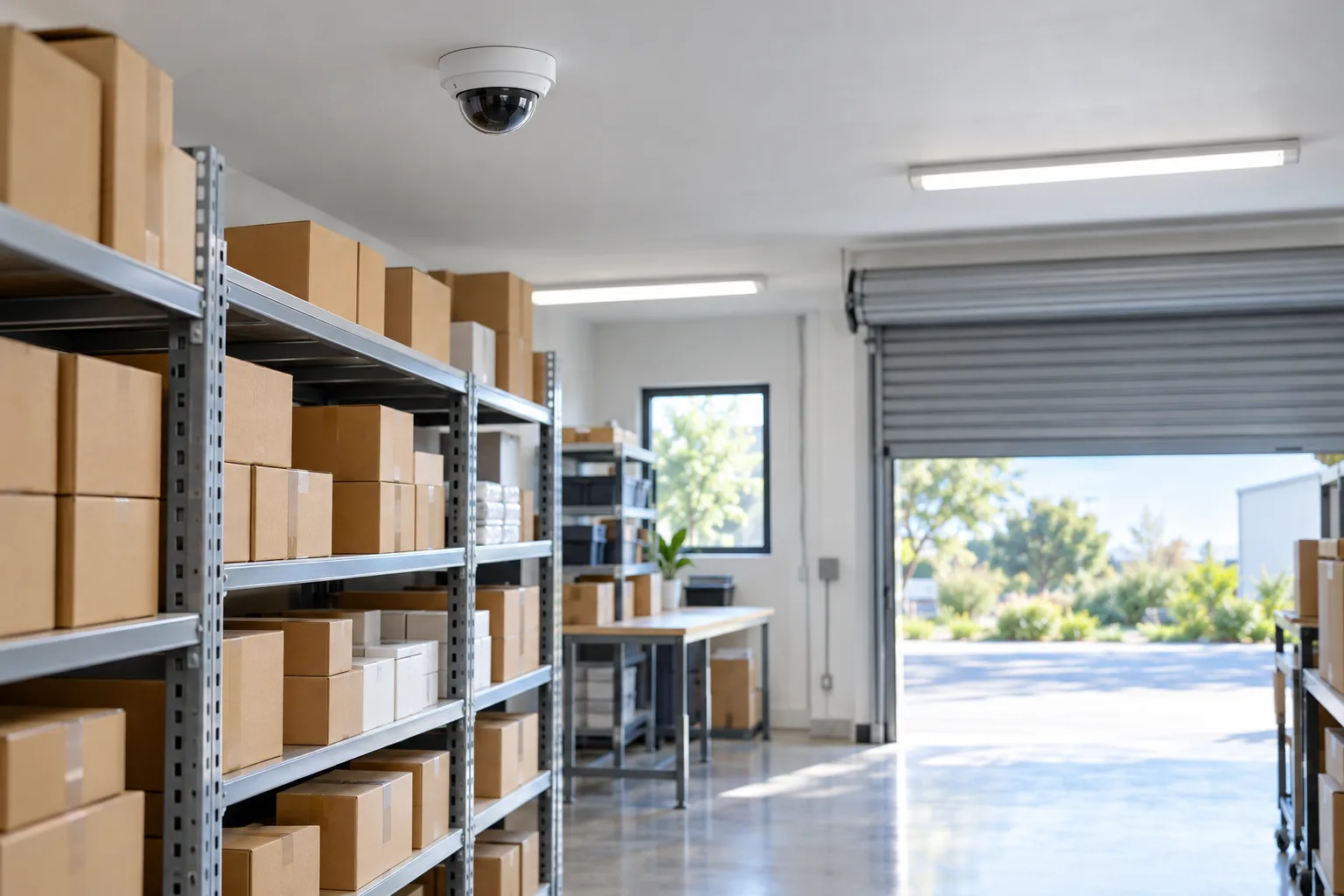
The perimeter count tells you how many CCTV cameras keep watch on the ways in. Spots inside the property come on top, and they're what a quick walk around the outside misses.
At home, the usual additions are the garage, where a camera shows whether a door was forced or left open, and any outbuilding with its own outside door. At a business, the list grows: reception, the till, the stock room, the server cupboard and the staff entrance from the inside. At an estate, the clubhouse entrance, the pool, the refuse area and the inside of the gatehouse all qualify, and a camera in the gatehouse shows how each visitor was let in.
A simple test decides each one. If something went missing here, would you want a recording of what happened and when? If the answer is yes, it needs a camera.
Cameras inside a workplace record staff, and footage of people is personal information under the Protection of Personal Information Act. A business should tell staff where the cameras are and why, and keep them out of private spaces such as changing rooms and bathrooms.
When the budget won't stretch: what to cover first
A full count can come to more cameras than the budget allows in one go. Covering positions in a set order keeps the system useful from the first day, and adds to it later without starting again:
- The main vehicle gate, recording faces through car windows and number plates.
- The pedestrian gate, because people on foot walk straight past a camera aimed at cars.
- The front door, or the main entrance at a business.
- The back door and side passages, in order of how hidden they are from the street.
- Inside spots: reception, the till, the stock room, then parking and common areas.
One rule holds at every stage: don't leave an uncovered gap between two covered spots. A gap in the middle of the perimeter gives someone a path from one side of the property to the other without appearing on a single camera. Ask for a recorder with spare channels, so new cameras plug in later without replacing it, and make sure its CCTV recording storage is sized for the full count, not only the first phase.
Closing Reflection
With every way in on your list, how many CCTV cameras you need stops being a guess. The gate, the pedestrian gate, each door and each passage has its own camera, and the spots inside where things could go missing have theirs. If the budget came in stages, the gate and the busiest doors went first, with no gap left between them. The next time someone comes through the side gate at 3:15am, the recording shows who it was, where they went and how long they stayed.
You shouldn't have to find the camera you're missing after a break-in. With Paul's Gates you won't.
Contact Paul's Gates to arrange a site visit and a written quotation for CCTV at your home, estate or business.
Frequently Asked Questions
How many security cameras do I need for a house?
Most houses need between four and eight security cameras, depending on how many ways in there are. Count each vehicle gate, pedestrian gate, outside door and side passage, and give each one a camera. A townhouse in a complex, with a front and back door and a shared perimeter, may need only two to four.
A freestanding house usually needs a camera on the gate, one on the pedestrian gate, one at each outside door and one on each side passage. A corner stand with two street fronts, a long back wall or an outbuilding with its own door adds more. Inside, the garage is the camera most often added later.
Walk the boundary before deciding, because a number chosen first tends to leave one gate or passage uncovered. Ask your installer to mark each camera on a sketch of the property, so you can see which way in each one covers and where the gaps are. The right number is the one leaving no way in without a camera.
How many CCTV cameras does a small business need?
A small business usually needs between six and ten CCTV cameras, counted from its entrances and the spots inside where stock or cash could go missing. Start with the yard gate, the front door, the staff entrance and any loading bay, which together often come to four or five cameras.
Inside, add a camera at reception, one over the till or cash point and one in the stock room. A server cupboard or an office holding valuables may need one too. A business with a large yard or parking area may add a wide camera covering the open space, so vehicles and people moving between the gate and the building stay on record.
Staff should know where the cameras are, and cameras should stay out of private areas such as bathrooms and changing rooms. If the budget comes in stages, cover the gate and the main entrances first, then the inside spots, and choose a recorder with spare channels so the system grows without being replaced.
Can one camera cover two entrances?
Sometimes, but not if you need a clear face at both. A single camera covering two entrances has to sit further back with a wider view, so each person appears smaller in the picture. You'll see someone come in, but you may not recognise who it was.
Where two entrances sit side by side, such as a vehicle gate with a pedestrian gate next to it, one camera can often cover both from the right angle. Test it by standing at each entrance and checking the live picture on a phone. If your face is clear at both, one camera does the job.
Where the entrances are further apart, or face different ways, each needs its own camera. A camera with two lenses on one bracket is a middle option, looking two ways from one spot, such as the gate and the driveway behind it. It counts as one camera on the wall but records two separate views, so check your recorder has a channel free for each.
Do I need CCTV cameras inside as well as outside?
Most homes manage with cameras outside, while most businesses need some inside too. Outside cameras watch the ways in and warn you while someone is still at the boundary. Inside cameras show what happened once someone is through, which suits spots where things could go missing.
At home, the garage is the most common inside camera, because it shows whether a door was forced or left open, and it's often where bicycles, tools and freezers sit. Some households add one covering the main passage, angled away from bedrooms and bathrooms.
At a business, reception, the till, the stock room and the server cupboard usually need cameras inside. Tell staff where the cameras are, keep them out of bathrooms and changing rooms, and keep footage only as long as you need it, because recordings of people are personal information under South Africa's privacy law. At an estate, the inside of the gatehouse and the clubhouse entrance are the usual spots.