
Your side door has been on camera for two years. Last night it opened at 2:10am, and the recording shows forty minutes of brickwork, because the camera was aimed at the wall two metres to the left. Whoever came in walked straight past it. Whether footage shows a face or the top of a cap is decided on the day the cameras go up, long before anyone needs them...
What is good CCTV camera placement?
CCTV camera placement is choosing where each camera goes, what it covers, and at what height and angle, so the footage shows a face, a number plate or a hand on a latch when you need it. Good placement covers every way onto the property. Poor placement fills a recorder with walls, sky and the tops of heads.
Key takeaways
- A camera works best where people have to stop: the gate, the intercom, the pedestrian gate and each door.
- Side passages, back doors, staff entrances and loading bays are the spots most often left without a camera.
- Mounted at 2.4 to 3 metres and angled down slightly, a camera records faces instead of the tops of heads.
- A camera clear by day can show a grey blur at night, so check every position after dark.
- Under South Africa's privacy law, cameras should watch your property, not a neighbour's windows.
- A recorder in a locked cabinet keeps the footage when a camera is pulled down.
The gate and the entrances: where people have to stop
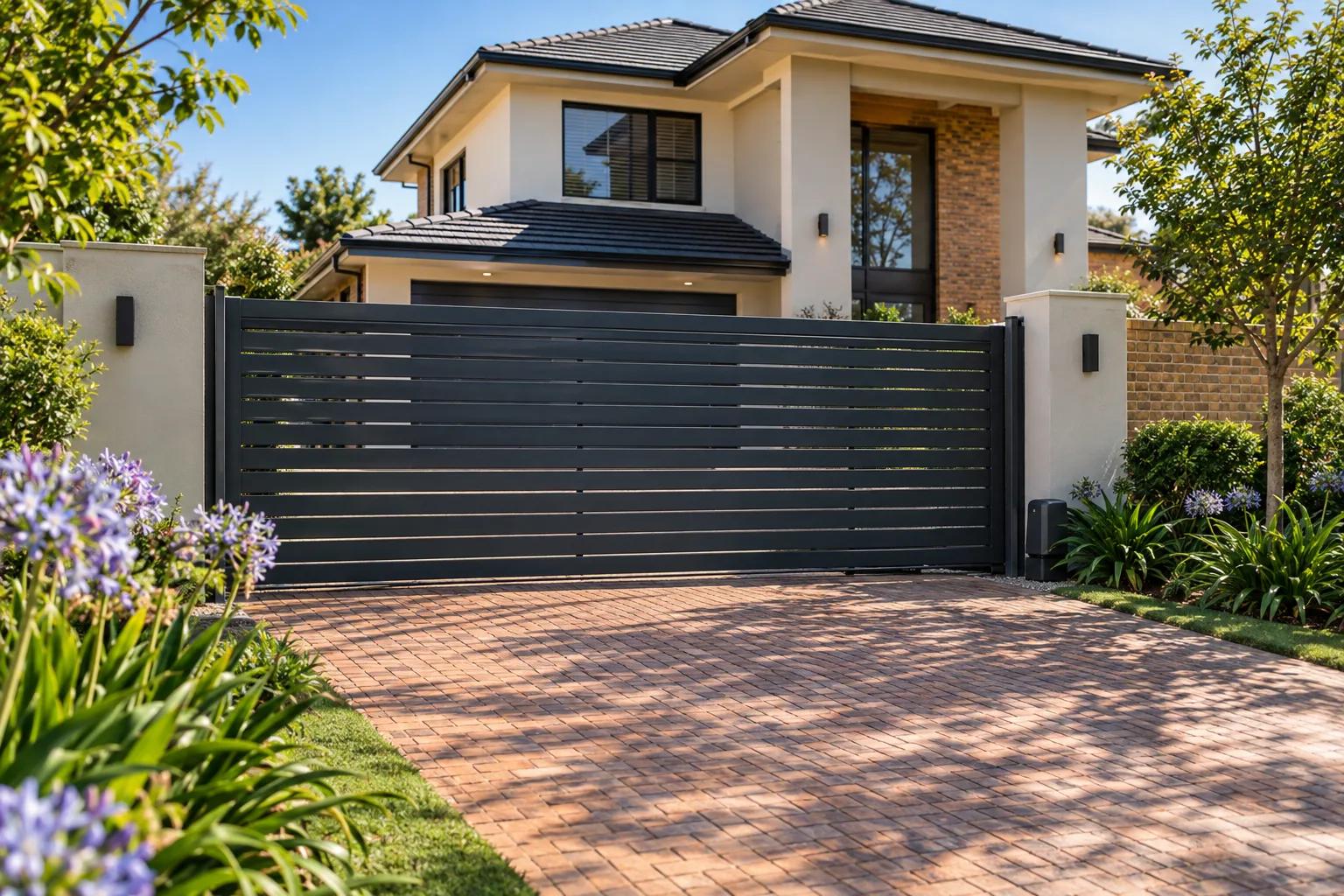
CCTV camera placement starts at the gate, because it's where everyone has to stop. A car waits for the gate to open and a visitor stands at the intercom, so the camera gets a few seconds of a still face instead of a blur walking past.
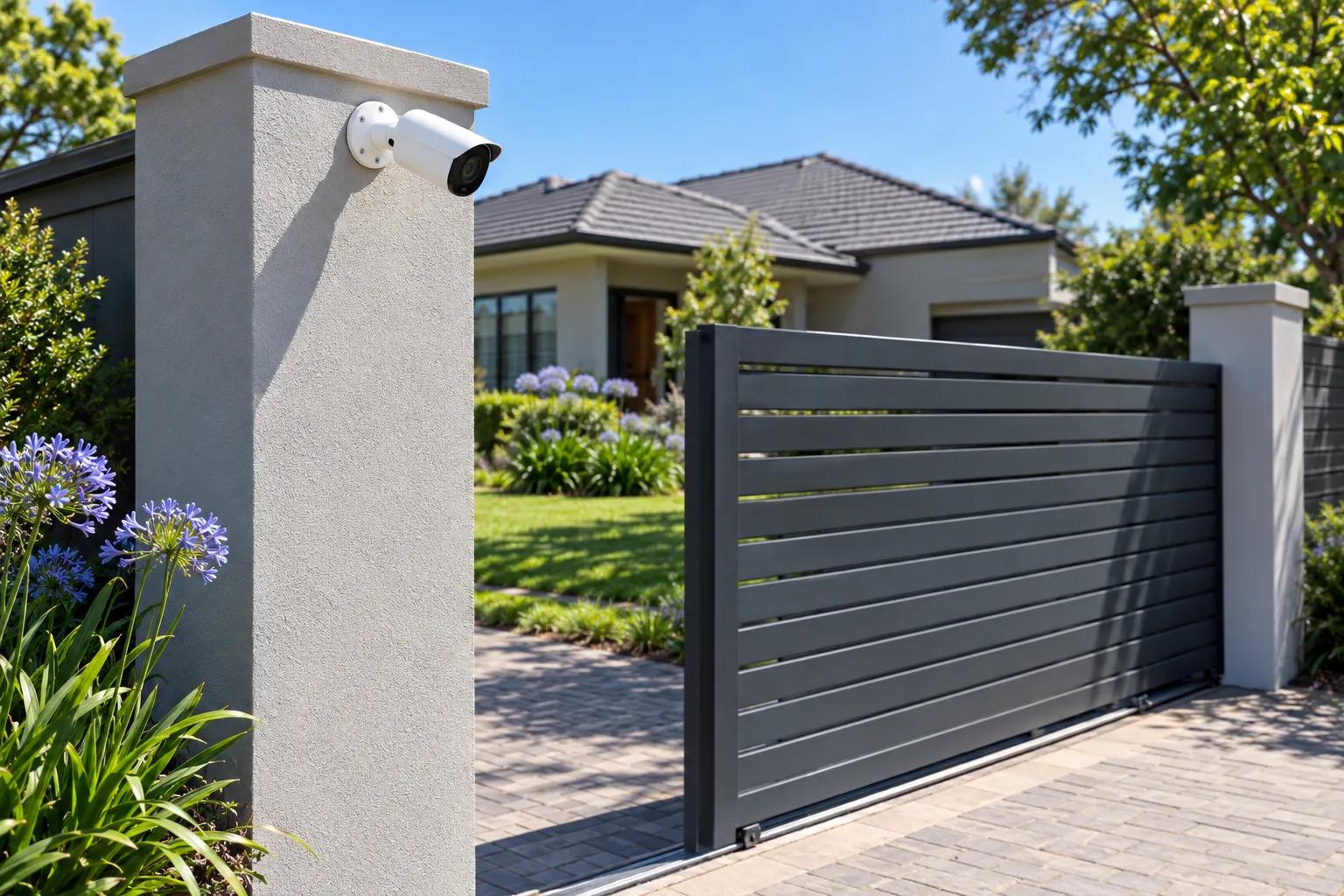
Mount the gate camera inside the property, about 2.5 metres up, looking out toward the street at a slight downward angle. From there it sees the driver's window, the number plate and the hand reaching for the intercom, and it sits above anyone trying to knock it off line. A second camera on the pedestrian gate, aimed at the latch and the approach, shows who walks in on foot.
At an estate, the entrance needs two views: one on the intercom and the gatehouse window, recording who spoke, and one on the boom, recording each vehicle as it passes. At a business, the gate camera covers the yard entrance and the delivery vehicles queuing outside it. Our CCTV page shows the cameras we fit at each kind of entrance.
Doors, side passages and the spots people skip
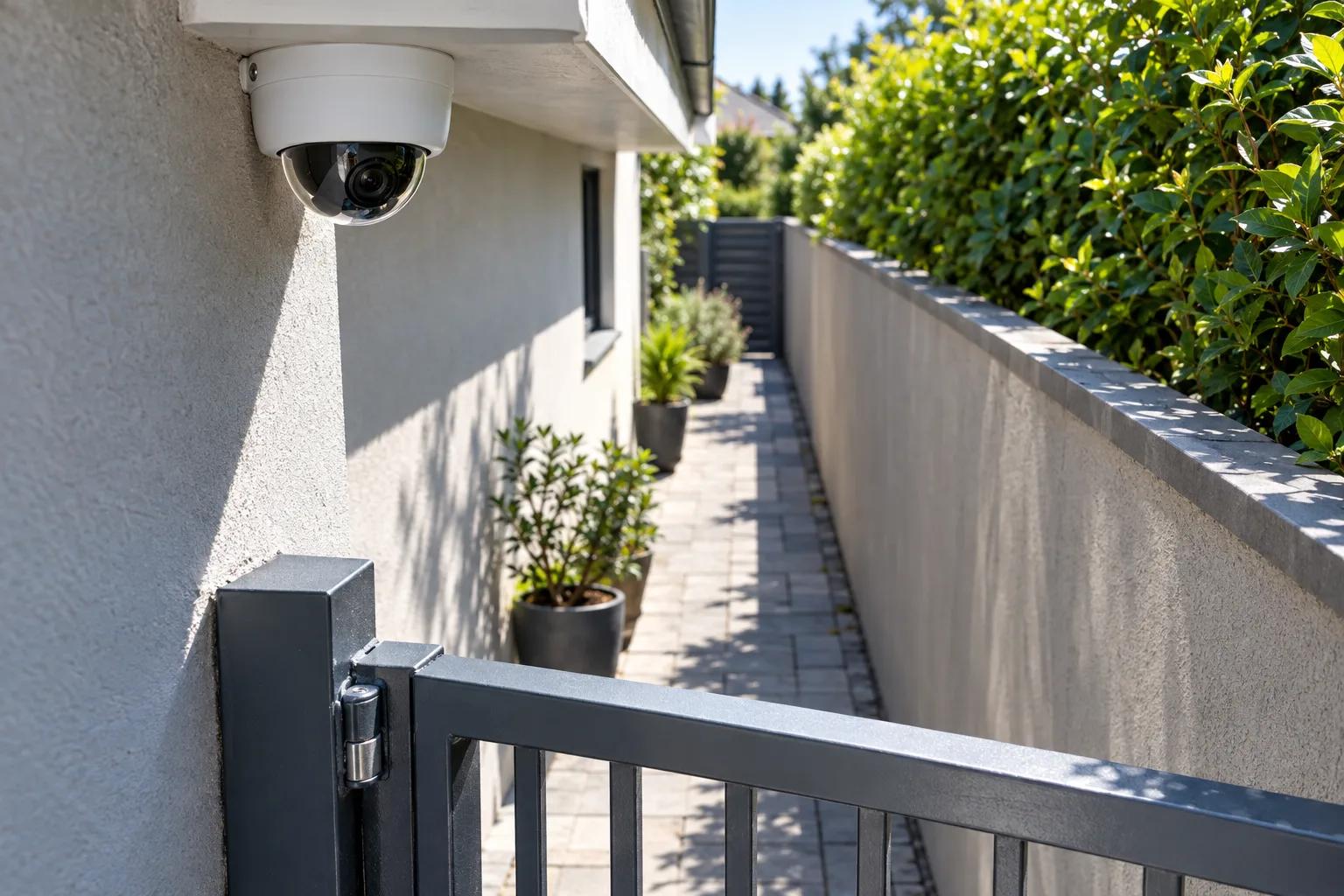
Every door someone can walk through needs a camera, and the doors people skip are often the ones used at night. The front door gets a camera on day one. The back door, the side passage, the staff entrance and the loading bay often don't, because they feel like the inside of the property.
A side passage hides anyone in it from the street and from the gate camera, which is why it's a common way in. One camera above the passage entrance, aimed down its length, covers it. At an office park, the staff entrance round the corner and the loading bay are the doors contractors, drivers and former staff know best.
For each door, the camera goes above the frame, looking outward, so the person is in the picture before they reach the handle. A camera inside the frame, looking down, records hair. Counting every one of these doors is the first step in working out how many CCTV cameras a property needs, and the answer is usually more than people guess.
Height and angle: the face test
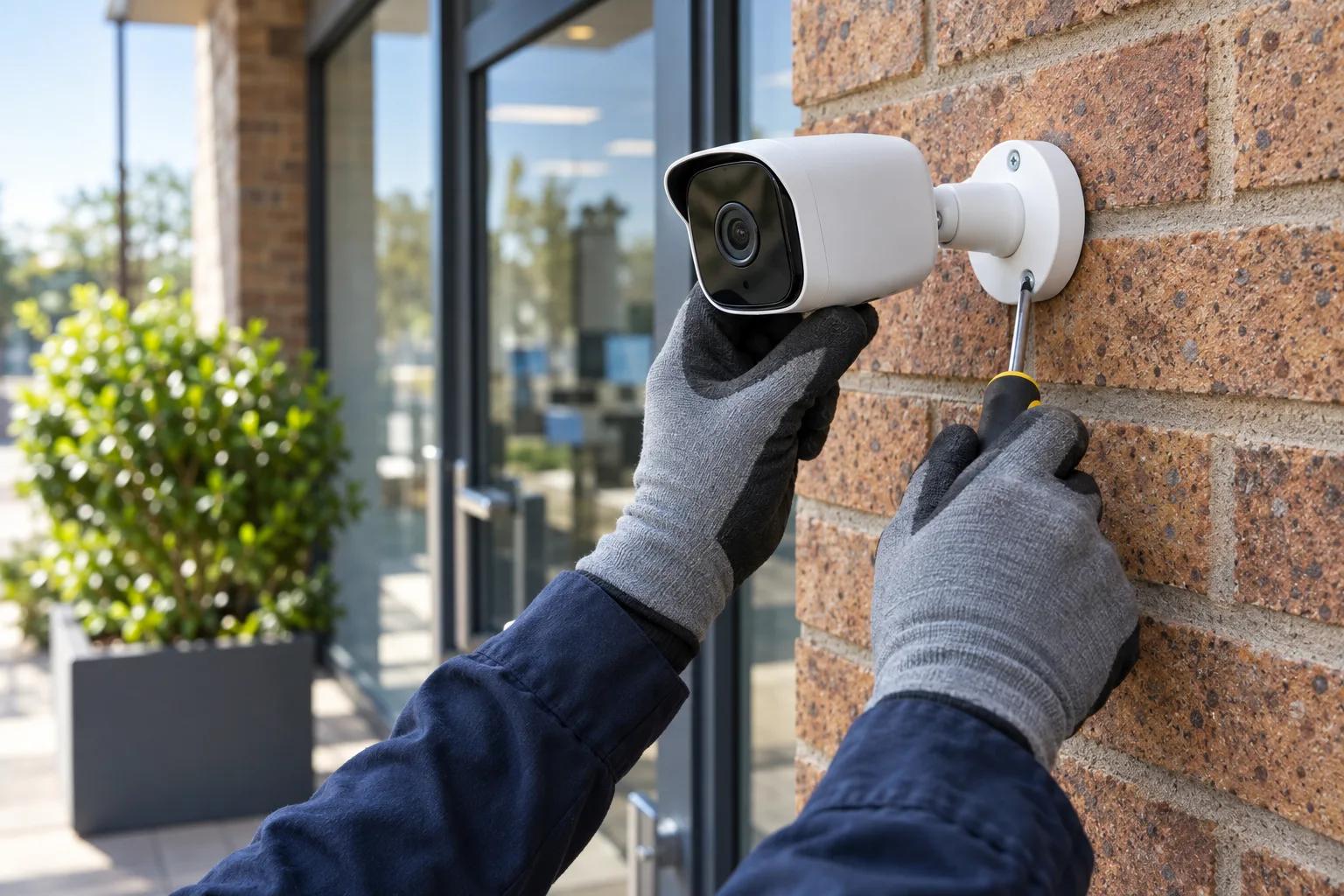
The most common mistake in CCTV camera placement is mounting cameras too high. A camera at four or five metres covers a wide area and looks impressive on the screen, but it records the crown of every head walking underneath it.
For faces, mount cameras between 2.4 and 3 metres and angle them down by about 15 to 30 degrees. At this height, a standard 2 megapixel camera shows enough of a face at two to three metres to recognise someone you know. Go lower, and the camera is easy to cover with a hand or turn with a broom.
The lens plays a part as well. A wide lens covers more of the garden but stretches faces at the edges of the picture, so at a gate or door, a narrower lens aimed at the entry point gives the clearer face.
The test takes a minute. Once the camera is up, stand where a visitor would stand, open the live picture on a phone and look at your own face. If you can't read it in daylight, the camera is too high, too wide or angled wrong, and it gets moved before the job is signed off.
Camera coverage zones by mounting height
| Mounting height | What it records | Best for |
|---|---|---|
| Below 2.2 m | Faces up close, but easy to cover or turn | Indoors only |
| 2.4 to 3 m | Recognisable faces at 2 to 3 m | Gates, doors and passages |
| 3 to 4 m | Faces lose detail past a few metres | Driveways and side yards |
| 4 to 5 m and higher | Movement and vehicles across a wide area | Yards, car parks and long boundaries |
After dark: checking the night picture
A camera giving a sharp picture at noon can show a grey blur at 2am. Most outdoor cameras light the scene with infrared, a light the camera sees and your eyes don't, and each one has a range, often 20 to 30 metres. Beyond it, the picture goes dark.
A gate camera watching an eight-metre approach is well inside its range. A camera watching a long driveway, an estate road or a loading yard needs a longer range, or a security light near it. A floodlight aimed into a lens does the opposite and turns the picture white.
So every position gets checked twice: once in daylight, and once after dark, walking the perimeter with the live picture open. Any spot going grey or black is a gap. Some owners choose a colour night vision camera for the gate and driveway, which keeps the colour of a jacket or a car after dark when there's some light for it to work with.
Blind spots, privacy and the site walk
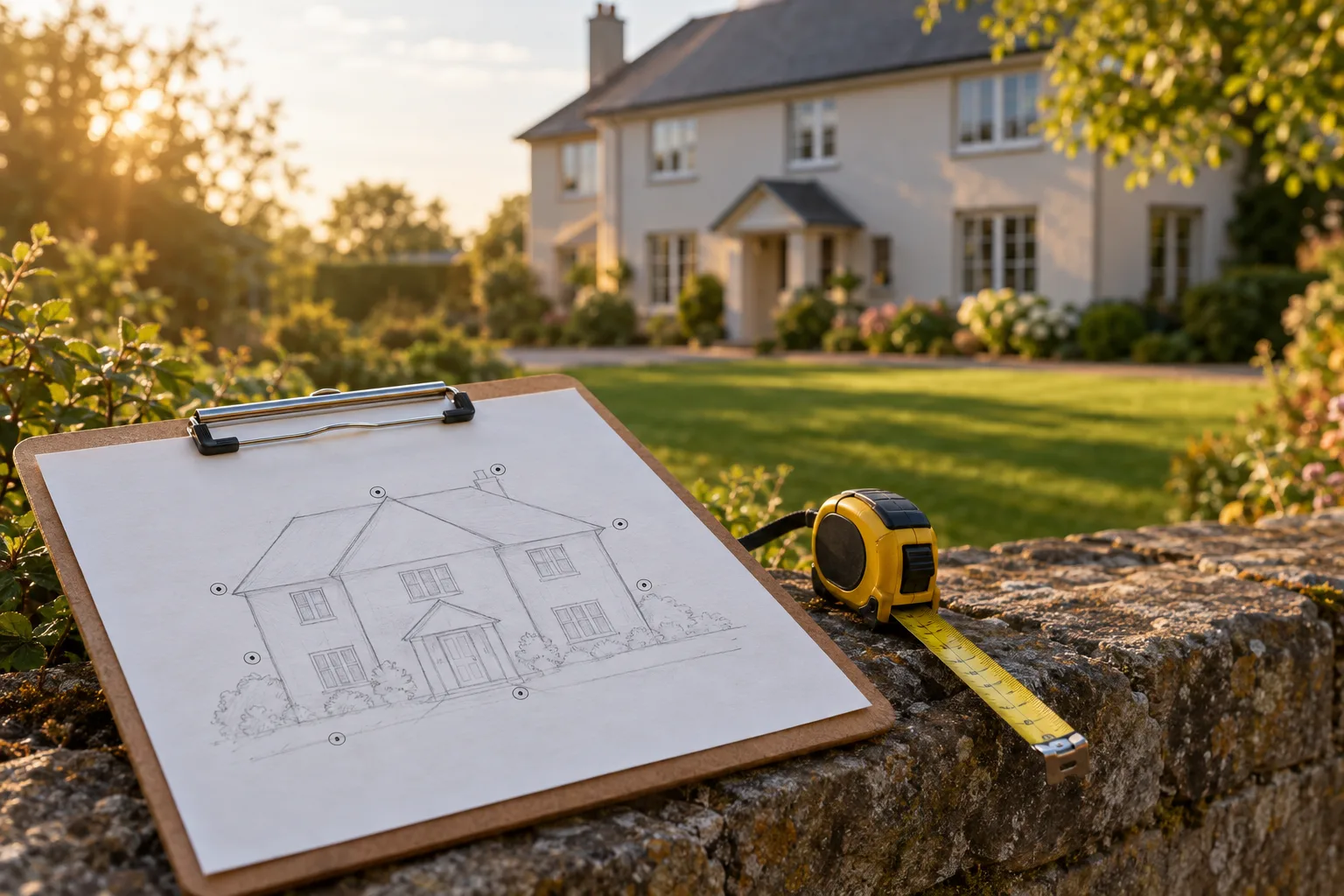
Blind spots are where CCTV camera placement most often fails. Every camera leaves gaps at its edges: the ground right under it, the corner where two walls meet, and the stretch of driveway behind a parked car. The reliable way to find them is to walk the property before anything is mounted.
Draw the boundary, mark every gate, door, passage and corner, then sketch what each camera would see. The spaces in between are your blind spots. Some close with a small change of angle, and others need another camera or a hedge cut back. A walk at the time of day when the light is worst, usually late afternoon with the sun low in the west, shows the glare and shadows a floor plan never will.
Point cameras at your own property. Footage of people is personal information under the Protection of Personal Information Act, so a camera filming a neighbour's windows or a long stretch of public street invites complaints. For estates, the Information Regulator, the body enforcing the Act, has proposed a code for gated access setting out how footage of visitors should be handled. It isn't final yet, so ask for a layout able to meet it.
Protecting the camera and the recorder
A camera on a wall is easy to reach, and a recorder by the front door is easy to carry away. Both need protecting, or the footage disappears on the one night you need it.
Mount cameras out of easy reach, and run the cables in conduit or tight against the wall, so no one can pull a cable free from outside. Outdoor cameras need a weatherproof rating such as IP66 to survive summer storms, winter dust and afternoon sun. An indoor camera used outside fogs up in its first rainy season.
The recorder, the box storing the footage, belongs in a locked cabinet or room, away from the front door. A burglar who walks out with it takes every recording along. Some systems also send footage to the cloud as it records, so a copy survives.
Whether the cameras run on a cable or on Wi-Fi changes where they can go, so settle wired vs wireless CCTV before choosing positions. The recorder's CCTV recording storage then decides how many days of footage you keep, and CCTV on your phone lets you check any camera from wherever you are.
Closing Reflection
With good CCTV camera placement, there's a camera at the gate, one on the pedestrian gate and one above every door and passage, and no way in the cameras don't see. Each one sits at 2.4 to 3 metres, angled down, and passed the face test in daylight and again after dark. The recorder is locked away, and no camera films the neighbours. The next time the side door opens at 2:10am, the recording shows a face, the time, and which way the person went.
You shouldn't have to find a blind spot in last night's footage. With Paul's Gates you won't.
Contact Paul's Gates to arrange a site visit and a written quotation for CCTV at your home, estate or business.
Frequently Asked Questions
Where should I place CCTV cameras at home?
At home, start with the vehicle gate, the front door and the pedestrian or side gate, because everyone coming in passes at least one of them. Mount each camera at 2.4 to 3 metres, above and slightly to the side of the entrance, looking outward so it catches a face as the person approaches.
Next come the back door and any side passage linking the front and back gardens. A side passage is out of sight from the street, so it's a common route for someone avoiding the gate camera, and one camera above its entrance, looking down its length, covers it.
A townhouse in a complex, where the boundary is shared, may need only a camera at each door. A freestanding house on a big stand usually needs the gate, both doors, the passages and the back corners. Whatever the layout, CCTV camera placement at home ends the same way: stand at each entrance once the camera is up and check your face on the live picture, in daylight and again after dark.
How high should a CCTV camera be mounted?
Mount a CCTV camera between 2.4 and 3 metres above the ground, angled down by about 15 to 30 degrees, if you want it to record faces. At this height, it looks at a person's face instead of the top of their head, and it's still high enough to stop someone knocking it off line with a hand.
Higher cameras cover more ground. A camera at four or five metres, under the eaves or on a pole, suits a yard, a car park or a long boundary, where you want to see movement and vehicles across a wide area. It won't give you a recognisable face, so pair it with a lower camera at each entrance.
Below about 2.2 metres, a camera is easy to cover, spray or turn. If a door frame is too low for the right height, a bracket can lift the camera above it. Test each camera from the spot where a visitor stands before the cable is fixed.
How far can a CCTV camera see at night?
Most outdoor CCTV cameras see about 20 to 30 metres at night, using built-in infrared light. Infrared is a light the camera picks up and your eyes don't, and the range is printed in the camera's specifications. Past this distance, the picture fades to dark.
Seeing movement and recognising a face are different things, though. A camera may show a figure at 30 metres after dark but identify a face only at a few metres, which is why entrance cameras sit close to where people stop.
For a long driveway, an estate road or a loading yard, choose a camera with a longer infrared range, or add a security light, which helps the camera and warns anyone approaching. Avoid aiming a floodlight into a lens, because the glare turns the picture white. Once the cameras are up, walk each one's area after dark with the live picture open on your phone, and look for spots going grey or black.
Can I point my CCTV camera at the street or my neighbour's house?
Point your cameras at your own property. A camera at the gate will catch a strip of pavement and the road outside, and this is normal, but a camera aimed down the street or into a neighbour's windows records people who have nothing to do with your property.
Footage showing people is personal information under the Protection of Personal Information Act. A homeowner filming their own yard for security is on firm ground, while a camera watching a neighbour's pool or bedroom window invites a complaint and, at worst, a legal dispute. Businesses and estates carry more duties, such as signs at the entrance telling people they're on camera, and keeping footage only as long as they need it.
If a camera has to look past your boundary to cover the gate, a narrower lens or a privacy mask, a blacked-out area set in the camera's software, keeps the neighbour's side out of the picture.