Access control systems
Control who comes in: intercoms, keypads, biometric readers, boom gates and turnstiles for homes and businesses.
Send us a message
Every property has a moment when it decides who comes in. For most homes, that moment is a remote clipped to a sun visor. For most businesses, it is a receptionist who knows every face, until the day they are off sick.
Somewhere out there is a remote nobody can account for. It belongs to a tenant who moved out, or the builder who finished your kitchen, and it still opens your gate.
What is access control?
Access control is the system deciding who can get through your gate or door, and when. It can be a remote, a keypad code, a tag, a fingerprint or a face. Each person gets their own way in, so you can add someone, set their hours, or take their access away without changing anything for anyone else.
We supply, install, maintain and repair access control for homes, estates, complexes, offices and industrial sites. Our teams work from Kya Sands in Randburg. Most of our work is in Gauteng, but for complexes and business sites we also take on projects across South Africa and beyond, planned for each site. Every system starts with a visit and a written quotation, before anything is ordered.
Ways to let the right people in
There is no single best way in. A family needs something nobody can lose, and a factory needs something it can switch off the day someone leaves. An estate needs both, for hundreds of people, and it needs to know when a tag turns up in the wrong hand.
So we start with how your property is used, then fit the parts to match.
- Fingerprint readers, so a finger opens the gate and a lost remote opens nothing
- Proximity tags and cards for staff, residents and contractors
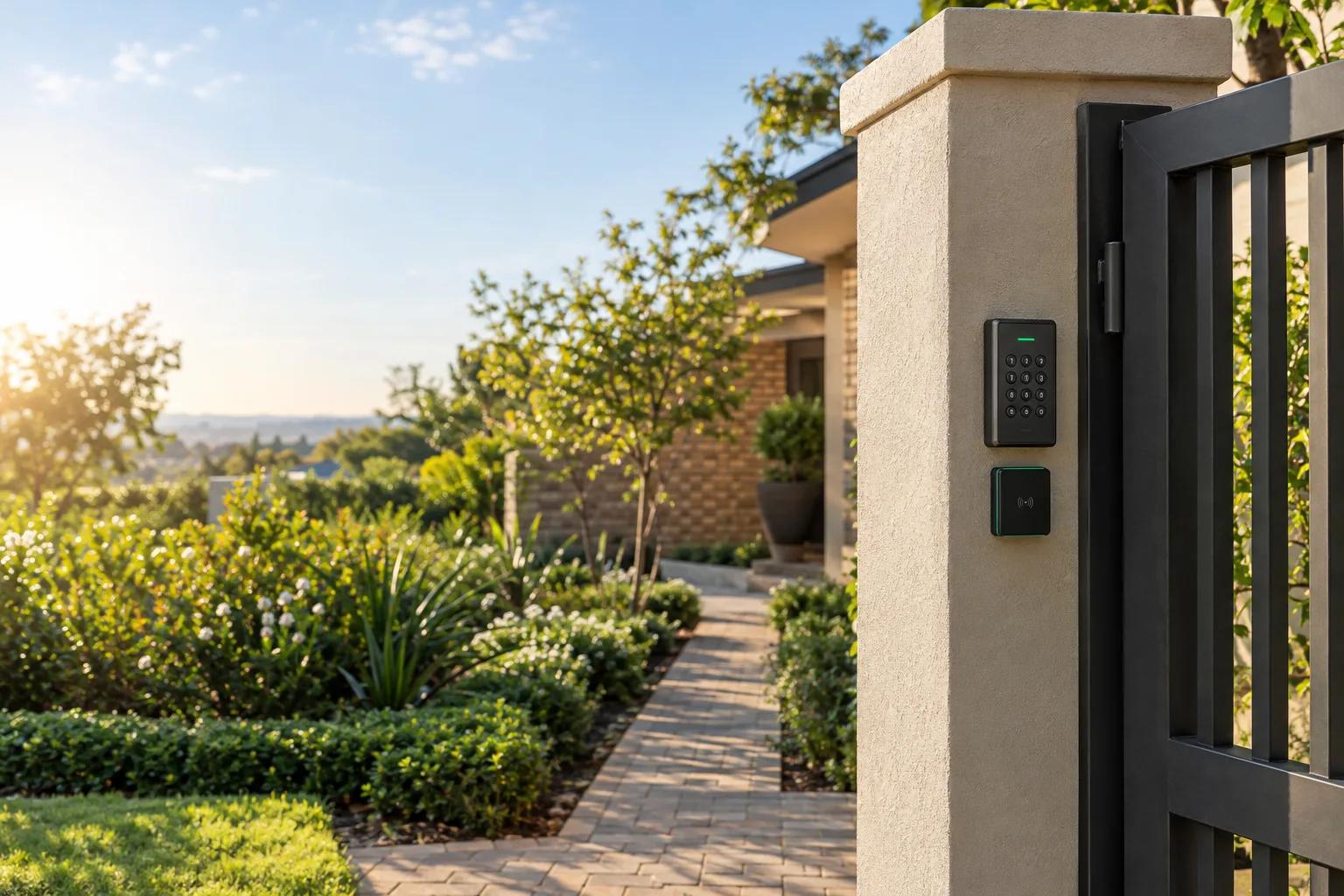
- Keypads with codes you can change when someone leaves
- Remotes, managed on the receiver so a lost one can be deleted
- Boom gates and turnstiles for estates, offices and factories
- Intercoms at the gate, so you see or hear visitors before you let them in
Access control for homes, estates and businesses
At home, it means the driveway gate and the front door. Picture the pedestrian gate at 7:15am, when the children, the domestic worker and the garden service share one spare remote. Nobody knows where the other copy went. A keypad or fingerprint reader gives each of them their own way in.
In estates and complexes, residents, visitors, contractors and deliveries all arrive at the same gate, often at the same time. Tags for residents, an intercom for visitors and a boom gate for vehicles keep the queue moving.
For offices, warehouses and factories, it means doors as well as gates. Staff get into the areas they work in, and at the hours they work. The stores, the server room and the director's office each get their own list. When someone leaves, their access leaves with them the same afternoon.
Knowing who came in, and when
A good system keeps a record, and the record is patient. When the side gate opened at 3am on a Sunday, you can see which tag opened it. Most nights, the answer is someone you know. On the night it isn't, the system has already told you.
For a business, the same record can feed time and attendance, so clocking in happens at the door. For an estate, it manages visitors without a guard writing names in a book nobody reads.
- Access by zone, so a cleaner can reach the kitchen but not the server room
- Set times for each person or group
- Visitor management at the gate
- Time and attendance for staff
- Access history reports
- Remote management from your phone or computer
Busy entrances: boom gates and turnstiles
Busy entrances need more than a gate. A boom gate decides which cars come in, and a turnstile lets people through one at a time.
Both open with the same tags, cards, fingerprints or codes as the rest of your system. People carry one way in for every entrance, and you take it back the day they leave.
At 7:30am an entrance either moves, or it backs up into the street. The right boom and turnstile keep it moving, and they keep a record while they do.
Boom gates and turnstiles in full →What affects the cost of access control
Nobody can price access control over the phone and mean it, because two gates can look the same and hide two different jobs. One has power a few steps away, while the other needs a trench dug under a paved driveway.
So the price is built from a handful of things, and we walk you through each one on the visit.
Every system starts there, because the ground under a driveway tells us more than any photo. The quotation is written down, and nothing is ordered until you accept it.
- How many entrances need control: one pedestrian gate, or every door, gate and boom on the site
- The way in: remotes and keypads cost less than fingerprint readers, plate cameras or turnstiles
- How many people use it, and whether you need records, zones and set times
- Cabling and trenching from each reader back to the controller and the power
- Battery backup, sized to keep the system running through load-shedding
- What is already on site and still works, because reusing it lowers the bill
Working with what you already have
Most properties already have a gate motor, an intercom or cameras. They were bought over the years from different people, and none of them talk to each other. In most cases, access control can join them, instead of starting again. During the visit we check what is on site and what still works. Nothing useful gets thrown away.
Before we leave, the team shows you how to add and remove people, change a code and check the records. You learn it in daylight, not at 2am with somebody waiting at the gate.
Afterwards, our own service department maintains and repairs the system. When a reader stops responding, you call the people who fitted it, and they already know your gate.
Case study: road closures and access control for Dunkeld East
Nine road closures for the Dunkeld East Residents' Home Owners' Association in Johannesburg. We built the whole project, from the pillars and gates to the islands, kerbs and signage, and handed it over in 12 weeks. At four of the closures, we also installed access control.
- The problem
A gate closes a road, but it can't tell you who came through. The residents wanted their suburb to work like a safe estate, with every car and every person coming in or going out controlled and monitored.
- What we found
A public road isn't a private driveway. Residents, visitors, staff and deliveries pass through all day, by car and on foot. The system had to keep traffic moving at rush hour, be hard to fool, and meet the City of Johannesburg's road closure rules, with power run to every closure under an official wayleave.
- What we did
At four of the closures, we installed Centurion Sector industrial boom gates for vehicles. Beside them we set up gooseneck pedestals with no-touch sensors and facial recognition cameras, so people come through without touching a button or a keypad. A qualified electrician, managed by us, ran the power and issued a Certificate of Compliance (COC).
- How it ended
Each boom lifts for one vehicle at a time, and the cameras record who came through. The residents have the estate-style control they asked for, on public roads, and we restored the tar, kerbs and pavements to their original state.
Access control: our gallery
Access control: our services
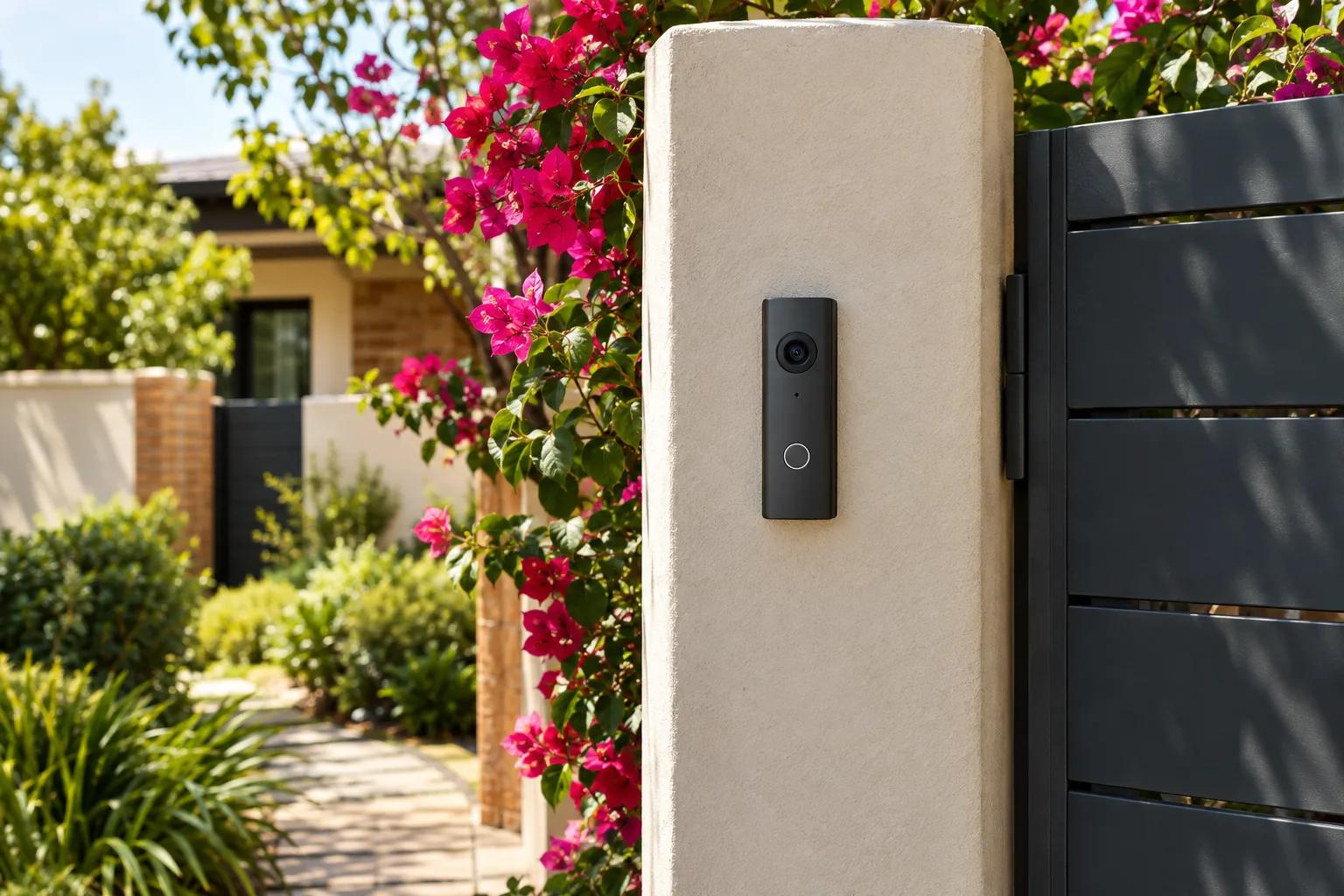
Intercom systems
IP, analogue, video, audio and GSM intercoms. Verify who's at the gate before you open it, from upstairs or across town.
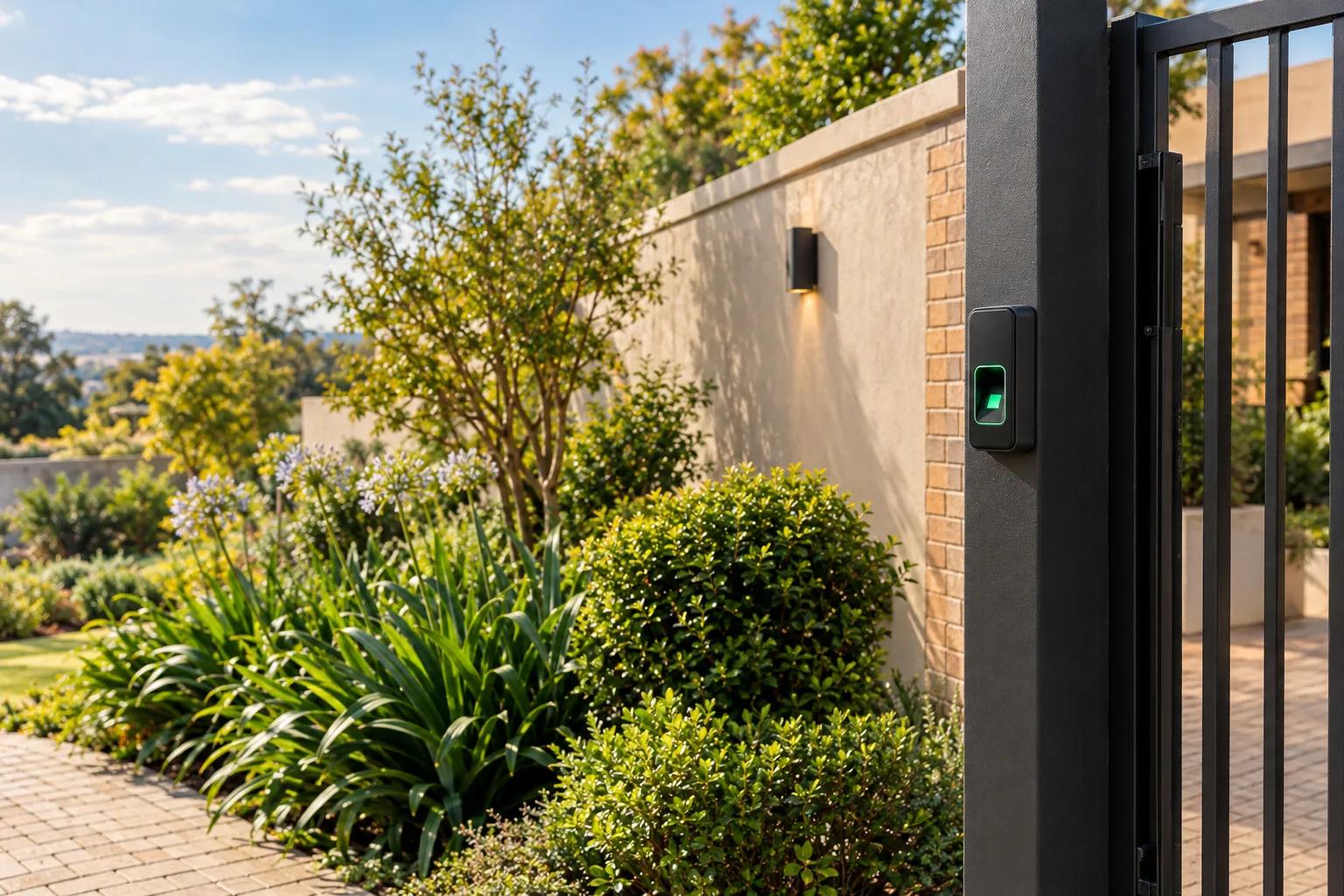
Biometric access control
Fingerprint access for gates and doors. A finger can't be lost or lent, and it can't be left in the car.
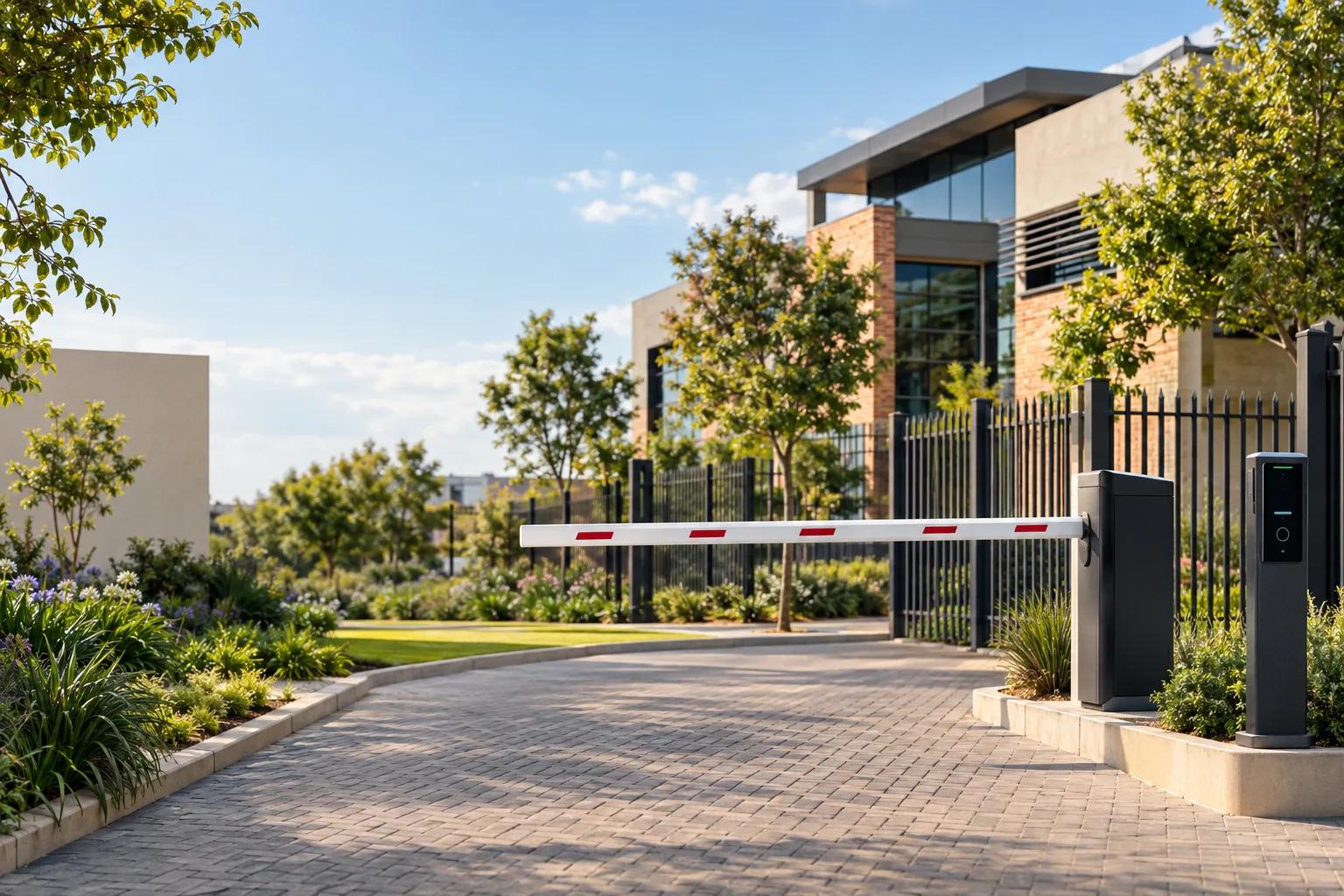
Boom gates and turnstiles
Boom gates and turnstiles for busy entrances where vehicles are controlled and monitored. They let one car or one person through at a time, so nobody slips in behind someone else, and nobody gets in without a record.
We offer service level agreements and finance for your access control. Each one is a service contract with 24-hour support at night and on weekends.
Planning your security from the start? Read our home and business security guide, covering gates, access control, cameras, alarms and fencing.
Frequently asked questions
Is access control only for businesses?
No. Access control works for homes as well as businesses, and we fit it at houses, estates, complexes, offices and industrial sites. At home, it gives everyone in the house their own way in, so nobody hands out spare remotes again. A common home job is a keypad or fingerprint reader on the pedestrian gate, with the driveway gate on remotes or tags. The domestic worker gets a code working only on weekdays. The garden service gets a code for Tuesday mornings. When someone leaves, you take their access away in minutes, without changing a lock or chasing anyone for a remote. For larger homes, the same system can log each opening, so you can see who came in and when. Every system starts with a visit to your property and a written quotation.
How much does access control cost?
The cost of access control depends on three things: how many entrances you have, how people will get in, and how far cable has to run. A keypad on one pedestrian gate costs far less than readers, boom gates and turnstiles for an estate or a factory. Fingerprint and facial recognition readers cost more than keypads and tags, but nobody can lend or lose them. Linking the system to your gate motor, intercom or cameras adds to the price, and often saves money later, because you manage one system instead of three. We don't quote off a price list. A consultant visits the site, looks at every entrance and how it's used, and then gives you a written quotation before anything is ordered. If the budget is tight, we can plan the system in stages, starting with the entrance carrying the most risk.
Which is better: tags, keypads or fingerprints?
No single option is best. The right choice depends on who uses the entrance and how often. Fingerprints and faces can't be lost or lent, so they suit homes, staff entrances and server rooms. Tags and cards are quick for large numbers of people, such as estate residents passing a boom gate twice a day. Keypads suit visitors and contractors, because you can give out a code for one day and change it in minutes. Remotes still make sense for a driveway gate, as long as they're rolling code remotes, which change their signal each time and are much harder to copy. Many of our systems combine two or more. An estate might use tags for residents, fingerprints for staff and a keypad code for deliveries. We recommend the mix after looking at your entrances and the people using them.
Can someone be removed from the system?
Yes. You can remove anyone from an access control system in minutes, and their access stops straight away. When a tenant moves out, a staff member leaves or a contractor finishes the job, their tag, card, code, fingerprint or face comes off the system. You don't need to change locks, collect remotes or wonder how many copies are out there. On most systems you can also limit access instead of removing it. A domestic worker can be allowed in on weekdays only, or a cleaning team between 6pm and 9pm. The record of past entries stays on the system after the person is removed. If something goes missing or a question comes up later, you can still see when they came and went. We show you how to add and remove people when the system is handed over.
Do you install boom gates and turnstiles?
Yes. We install, automate, service and repair boom gates for vehicle entrances and turnstiles for people. Most of this work is at offices, factories, warehouses, estates and business parks. A boom gate lifts for one vehicle at a time. A turnstile lets one person through at a time, so nobody slips in behind someone else. Both open with the same tags, cards, codes, fingerprints or faces as the rest of your access control, so each person needs one credential for the whole site. Both can link to an intercom at the entrance, so a visitor can call the guardhouse or reception before they're let in. Every opening is logged, which helps when you need to know who was on site at a given time. Our service department looks after them afterwards, and a service level agreement adds 24-hour support.
Can it work with my gate motor and intercom?
In most cases, yes. Access control can usually link to an existing gate motor and intercom, so one tag, code or fingerprint opens the gate and the intercom still lets visitors call you. During the site visit, we look at what is already installed, how old it is and what it can connect to. We tell you plainly what can be joined up, and what would need replacing to work properly. A gate motor in good condition can often stay. An old intercom without the right connections may need a newer unit. Once the systems are linked, you manage one setup instead of three working separately. Linking them also gives you a single record of who came and went, whichever way they got in. Every recommendation comes with a written quotation before anything is ordered.
What happens to access control during load-shedding?
Access control keeps working during load-shedding if it has backup power. Readers, controllers and gate motors can all run on batteries, which charge while the power is on and take over when it goes off. The weak point is the battery nobody has tested. Batteries lose capacity over time, often without any warning, and an old one gives out on the first long outage, usually at night with the gate shut. We size the batteries for the length of outage you're likely to see, and we test them at every service visit. For sites needing more, such as estates and businesses, solar power or a battery backup can keep the whole entrance running through long outages. If you already have a system, we can check its batteries and tell you how long it will last without power.
Where we work
Our teams work from our Kya Sands workshop, for homes, estates and businesses in Randburg, Fourways, Sandton, Midrand, Waterfall, Centurion, Roodepoort, Krugersdorp, Bedfordview, Edenvale and the West Rand. See all the areas we serve.
Talk to us about your home and business security needs
You shouldn't have to sit at the bottom of your own driveway, wondering whether the gate will close. With Paul's Gates you won't. Send us a message or chat on WhatsApp, and we will come and look.