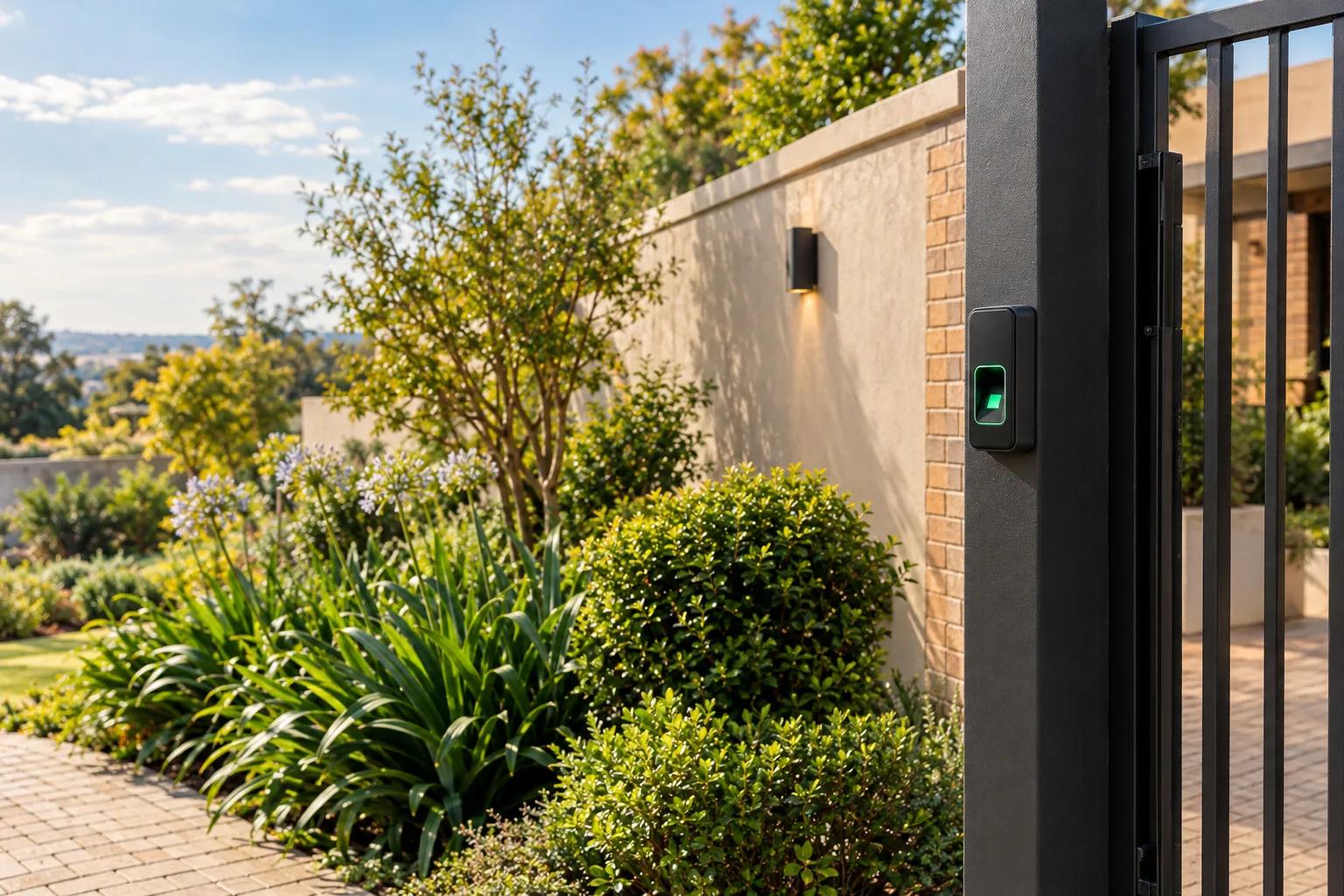

Biometric access control
Fingerprint access control for gates and doors.
Send us a message
Remotes get lost. Codes get shared. A code given to the painter in 2019 is still out there, written on a scrap of paper in someone else's bakkie.
A fingerprint is harder to lend. It doesn't end up on a scrap of paper, in a cubbyhole or in a friend's pocket.
What is biometric access control?
Biometric access control opens a gate or door when it recognises part of a person, usually a fingerprint or a face. Instead of carrying a remote or remembering a code, you place a finger on a reader or look at a camera. Nobody can lend or lose it, and each entry is logged with a name and a time.
Biometric access control opens the gate or door for the people you have added, and nobody else. We supply, install and maintain fingerprint readers for homes, offices, estates and industrial sites.
How a fingerprint reader works
Each person scans their finger once to enrol. After that, the reader checks every finger against the list and opens for a match. It takes less time than finding a remote.
Nothing to carry, nothing to lose and nothing to lend. When someone leaves, you delete their fingerprint, and their access ends that day.
Enrol a second finger for each person as well. A cut or a plaster shouldn't lock anyone out of their own home.
Where it makes sense
Fingerprint readers suit gates, front doors, offices, server rooms and staff entrances. They suit any door where the list of people changes, and where a lost remote would be a problem.
We assess the spot first. A reader in direct afternoon sun or driving rain needs the right housing. A reader at a driveway needs to sit where a driver can reach it.
At home, the pedestrian gate is the usual spot. At work, it is the stores, the server room and the staff entrance.
A record of every entry
Most biometric systems we fit can keep a record of each entry. You see whose finger opened which door, and when.
For a business, that record can feed time and attendance. Clocking in happens at the door, and nobody clocks in for a friend.
For a home, nobody reads the record most of the time. It earns its place on the one day you need to know who came in while you were out.
The record also shows what didn't happen: a door staying shut all weekend, as it should.
Fingerprints, tags and remotes together
Fingerprints don't have to replace everything. Many properties use a reader at the pedestrian gate, remotes for the cars and a keypad for visitors.
We check your gate motor, intercom and current setup on the site visit. Then we tell you what can be joined to a fingerprint reader. Nothing useful gets thrown away.
Where the system allows, everything works from one list. Add a person once, and remove them once.
Access control →Biometric access control: our gallery
Related services
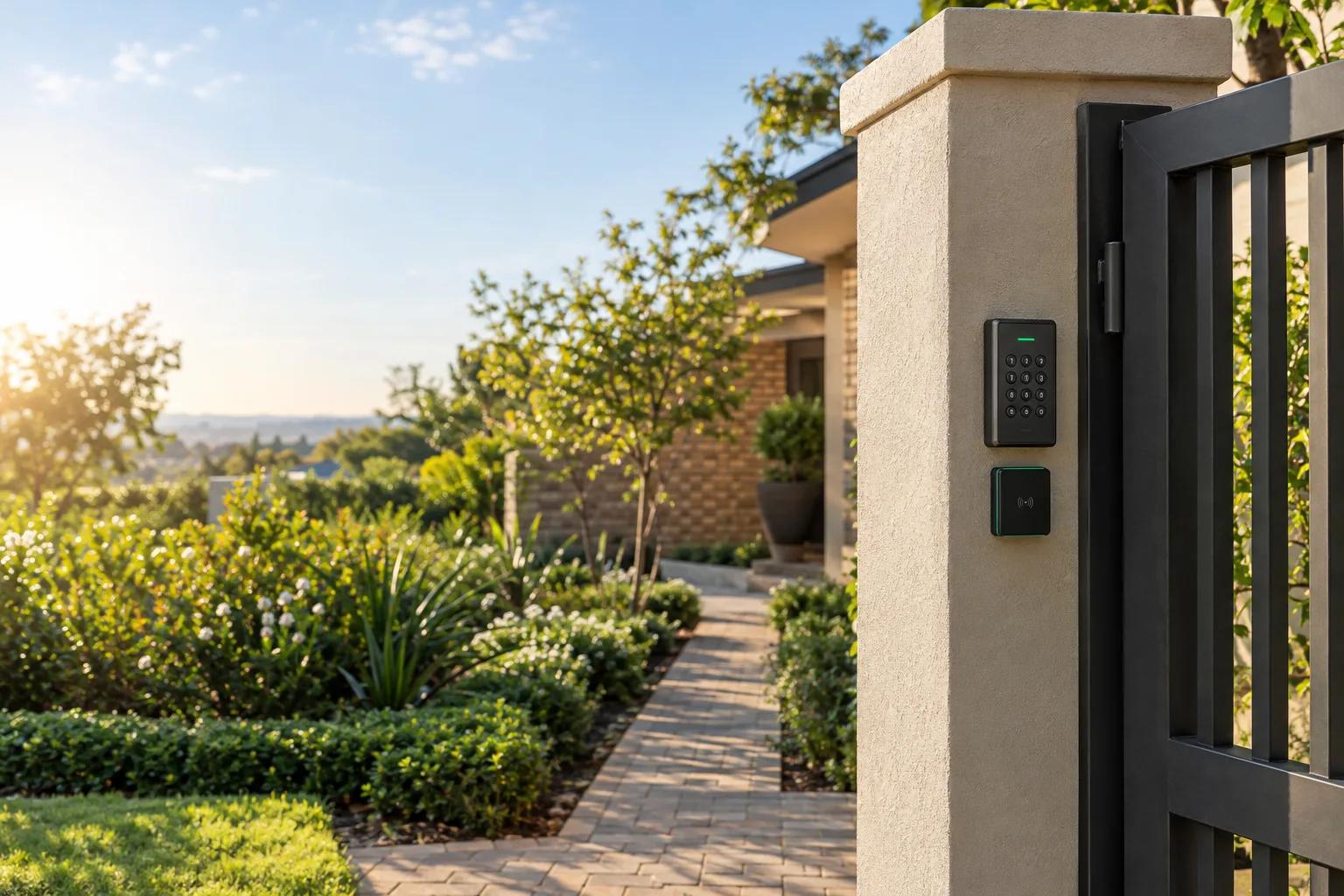
Access control
From a remote or keypad at the gate up to network fingerprint and facial recognition readers, and cameras with built-in AI analytics. You decide who comes in, and when.
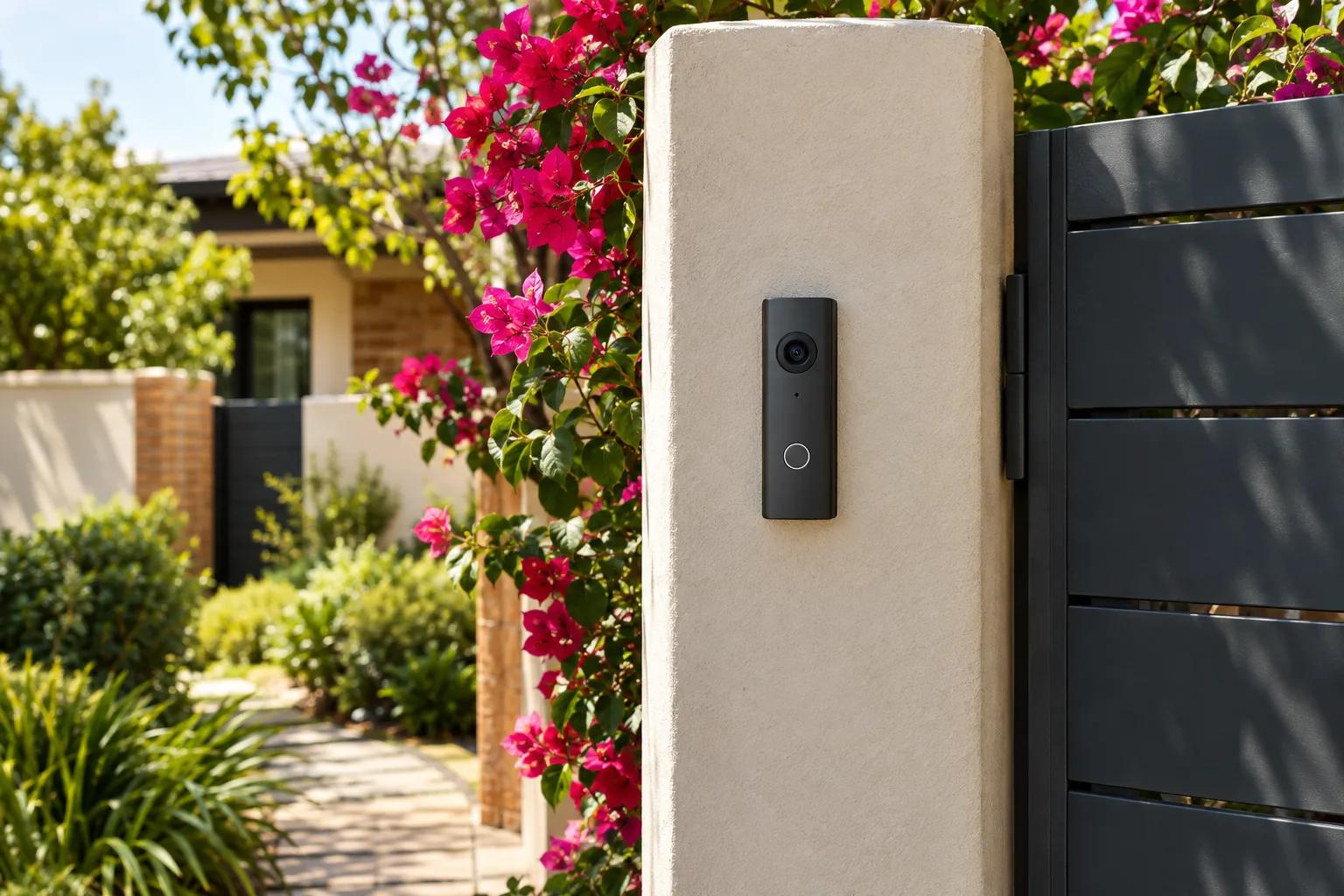
Intercom systems
IP, analogue, video, audio and GSM intercoms. Verify who's at the gate before you open it, from upstairs or across town.
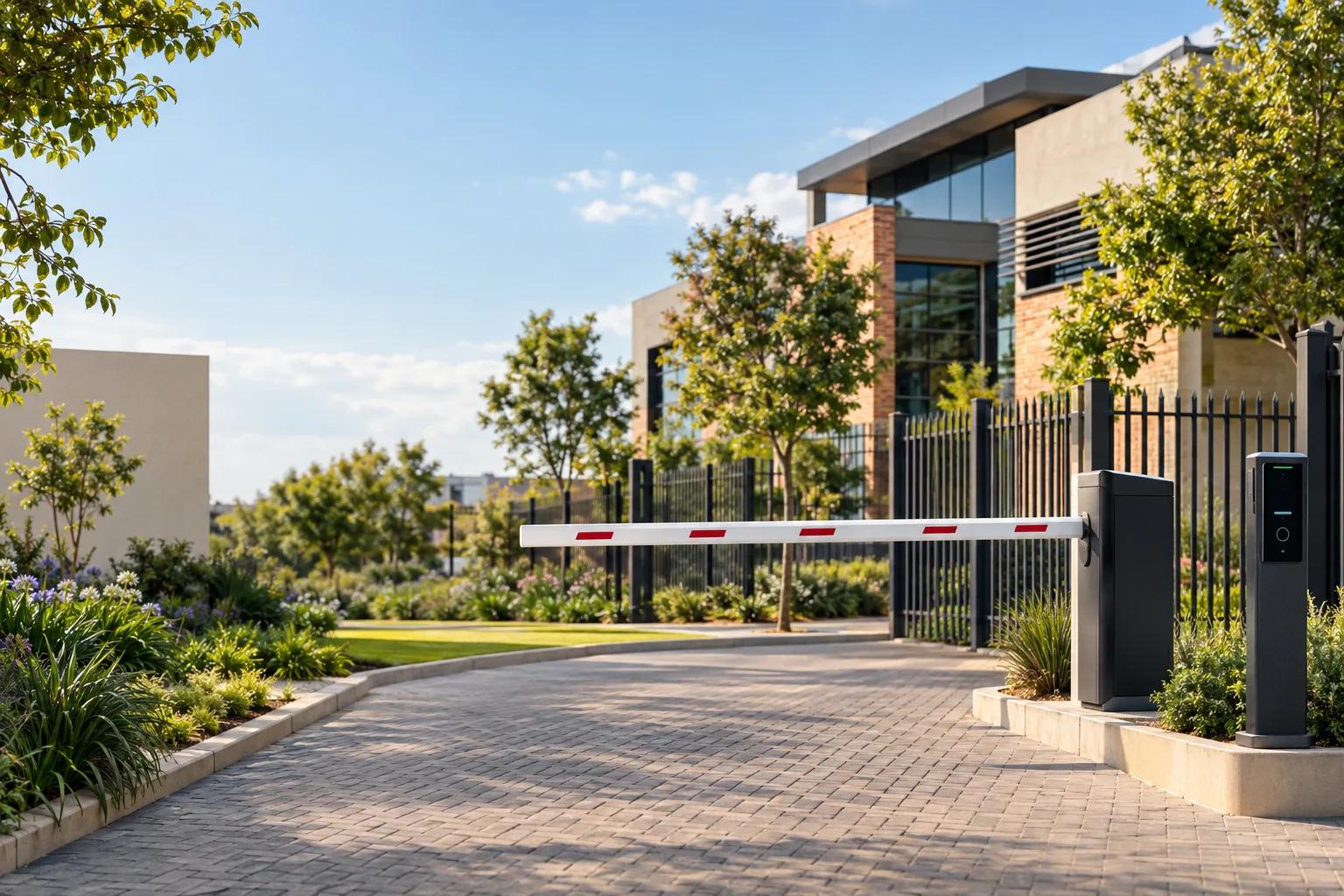
Boom gates and turnstiles
Boom gates and turnstiles for busy entrances where vehicles are controlled and monitored. They let one car or one person through at a time, so nobody slips in behind someone else, and nobody gets in without a record.
We offer service level agreements and finance for your biometric access control. Each one is a service contract with 24-hour support at night and on weekends.
Planning your security from the start? Read our home and business security guide, covering gates, access control, cameras, alarms and fencing.
Frequently asked questions
What happens if someone leaves?
When someone leaves, their fingerprint or face comes off the system, and their access stops the same day. You don't need to change locks, collect remotes or wonder whether a copy is still out there. Removing a person takes a few minutes on the system's software or keypad, and we show you how when the system is handed over. If you'd rather not remove them completely, most systems let you limit their access instead, for example to weekdays or set hours. Where the system keeps records, their past entries stay on file after they're removed. This record helps later, if a question comes up about who was on site on a given day. For businesses with staff turnover, removing a leaver can be part of the same checklist as returning their keys and closing their email.
Can I use fingerprints and remotes together?
Yes, in most cases. Many properties use a fingerprint reader at the pedestrian gate and remotes or tags for the cars at the driveway gate. Others use a reader at the front door and keep remotes as a backup. The fingerprint reader and the remote receiver both connect to the same gate motor or lock, so either one opens it. On the site visit, we check your gate motor, intercom and any access control already in place, and tell you what can be joined and what would need replacing. If you use remotes, we recommend rolling code remotes, which change their signal each time and are much harder to copy. The written quotation lists exactly what each entrance will use, so you know before anything is ordered.
Does it keep a record of who came in?
Most biometric systems we fit can keep a record of each entry: whose fingerprint or face, which door or gate, and what time. This record helps if something goes missing, if there's a dispute about hours, or if you need to know who was on site during an incident. Some systems show the record on a computer at the office. Others send it to an app, so you can check from your phone. For a business, the same record can feed time and attendance, so staff clock in at the door instead of on a separate machine. Not every reader stores records, and some only keep a set number of entries, so we confirm what your system will record before you commit. It's listed on the written quotation, along with how long the records are kept.
What if a fingerprint doesn't scan?
A fingerprint can fail to scan because of dirt, cuts, plasters, dry skin or wet hands. People doing manual work, such as builders and gardeners, sometimes have worn prints which read poorly. For this reason, each person should enrol at least two fingers, so a cut on one doesn't lock them out. Where it suits the site, a keypad code, tag or card can also work at the same door as a backup. Facial recognition readers avoid most of these problems, because they don't need a clean finger at all. Keeping the reader clean helps too, since dust and grease on the sensor cause more failed scans than people expect. We set up the backups when we install, and we show you how to add a second finger for anyone having trouble.
Do fingerprint readers work outside?
Yes. Fingerprint readers work outside when they're built for it and fitted with the right housing. Direct afternoon sun, driving rain and dust all affect a reader, so we check the spot before we fit one and use outdoor-rated units with a cover where needed. A reader facing west into the late sun may need a hood or a slightly different position. At a driveway gate, the reader goes on a pedestal where a driver can reach it from the car window, so nobody gets out in the rain. At a pedestrian gate, it goes at a comfortable height beside the lock. Facial recognition readers can also work outside, with the right lighting for night use. The written quotation lists the reader, the housing and where each one will go.
Where we work
Our teams work from our Kya Sands workshop, for homes, estates and businesses in Randburg, Fourways, Sandton, Midrand, Waterfall, Centurion, Roodepoort, Krugersdorp, Bedfordview, Edenvale and the West Rand. See all the areas we serve.
Talk to us about your home and business security needs
You shouldn't have to sit at the bottom of your own driveway, wondering whether the gate will close. With Paul's Gates you won't. Send us a message or chat on WhatsApp, and we will come and look.