Solar installation
Solar panels, inverters and batteries for homes and businesses, so your security keeps running when the grid goes down.
Send us a message
It is 7pm and the street goes dark. Your gate is halfway open. The motor has a battery, so it closes, slowly. The alarm panel beeps once and goes silent.
For the next few hours, everything runs on small batteries never meant to carry a house. Then, one by one, they give up.
What is solar installation?
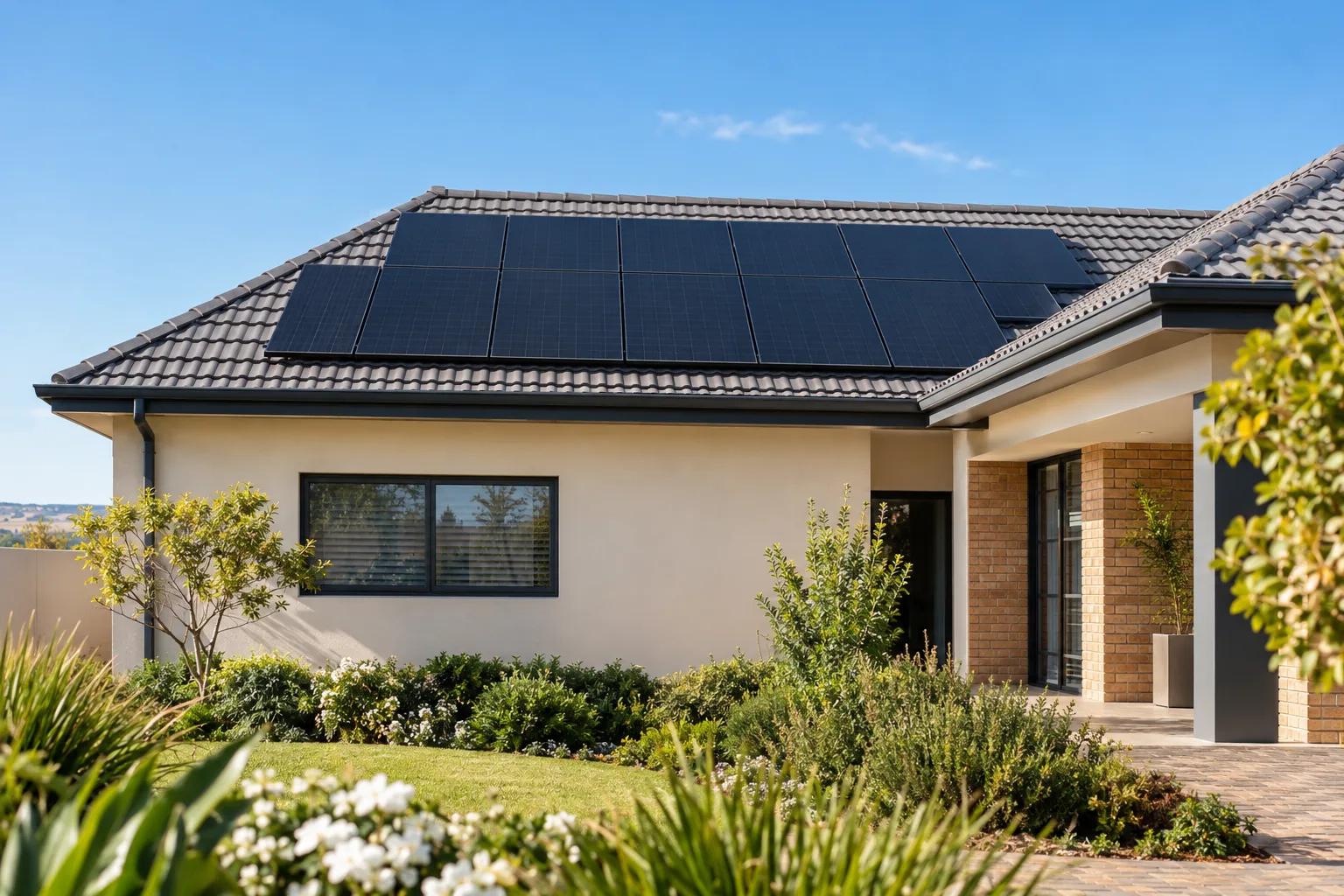
A solar installation puts panels on your roof to make electricity from sunlight, with an inverter to manage it and batteries to store it. During the day, it powers your home or business and charges the batteries. When the grid goes down, the batteries keep your gate motor, alarm, lights and other essentials running.
We install solar power and backup systems for homes and businesses: panels on the roof, an inverter to manage the power, and batteries to store it. Every job starts with a site visit and a written quotation.
Solar power for your home or business
A solar system has three main parts. Panels on the roof turn sunlight into electricity. An inverter turns it into the kind your plugs use and decides where it goes. Batteries store what you don't use, for the evening and for power cuts.
Some systems add only an inverter and batteries, with no panels, so the house keeps running when the grid drops. Others go the whole way, with enough panels to carry most of the day. We help you choose before anything is ordered.
- Solar panels, mounted and wired on your roof or on a ground frame
- Hybrid inverters switching to battery power when the grid fails
- Lithium batteries for backup and night-time power
- Backup-only systems with no panels, for a smaller budget
- Monitoring on your phone, so you can see what the system is doing
Sized to the way you use power
An undersized system runs flat by 9pm. An oversized one costs money you never get back.
On the site visit we look at your electricity bills, your distribution board and your roof. We check which way the roof faces, what shades it, and whether it can carry the panels.
Then we split the house in two: what must keep running in a power cut, and what can wait. The gate, the alarm, the fridge, the lights and the Wi-Fi usually make the first list. The geyser and the oven usually don't.
Solar power for your security systems
Your security is the part of the house you need most in the dark. So it goes on the backup circuit first.
We connect the gate motor, the alarm, the electric fence, the cameras and the intercom to the protected circuit. When the grid fails, they carry on, and nobody has to wonder whether the fence is still live.
For a gate or a camera far from the house, a small solar panel and battery can power it on its own, with no cable to dig in.
Gate automation →Backup power through load-shedding
Load-shedding comes and goes, but power cuts don't keep to a schedule. A cable theft, a storm or a fault at the substation can take the street down at any hour.
A hybrid inverter switches to battery power in a fraction of a second, so the lights and the Wi-Fi carry on. Lithium batteries last for thousands of charge cycles, far longer than the old lead-acid kind.
We size the batteries to how long you need to last, because a few hours of essentials is one budget and a full night with the whole house running is another.
Installed safely and signed off
Solar is electrical work on your house wiring and your roof. It must be done properly, and it must be signed off.
The installation gets an electrical Certificate of Compliance. Where your municipality requires it, the system is registered with them before it is switched on. In Johannesburg, City Power must approve a system connected to its grid.
Panels are fixed to the roof structure on mounting rails, and every roof fixing is sealed. The first summer storm should find nothing to leak through.
What affects the cost of solar
The price depends on how much power you want to make, how much you want to store, and what must keep running when the grid is down.
We visit, measure and check your usage before we price anything. The quotation is written down, and nothing is ordered until you accept it.
- How many panels you need, and the roof space they take
- The size of the inverter
- How many batteries, and how long they must carry the load
- Which circuits go on backup: security only, essentials, or the whole house
- The roof: its type, its height and how hard it is to reach
- The electrical work at the distribution board, and the paperwork to sign it off
Looking after your system
Solar has few moving parts, but it isn't a job you fit and forget. Dust on the panels cuts what they make. A battery pushed flat every night ages early.
We check the panels, the connections, the inverter settings and the battery health, and we show you how to read the monitoring app. If the numbers drop, you see it on your phone before you see it on your bill.
We offer service level agreements and finance for your solar. Each one is a service contract with 24-hour support at night and on weekends.
Planning your security from the start? Read our home and business security guide, covering gates, access control, cameras, alarms and fencing.
Frequently asked questions
Do you install solar for homes and businesses?
Yes. We install solar panels, inverters and lithium batteries for homes and businesses. Some clients want backup power only, to keep the lights, Wi-Fi and security running during load-shedding. Others want enough panels to carry most of the day and cut their electricity bill. Many start with backup and add panels later, which a well-planned system allows. We look at what you need to keep running, how much electricity you use and the space on your roof. Then we design a system to suit, with room to grow. Because we also install gate motors, alarms, electric fences and cameras, we make sure your security stays powered during outages. Every job starts with a site visit and a written quotation, and nothing is ordered until you accept it.
Can my gate motor and alarm run on solar?
Yes. When we install a solar or backup system, we put the gate motor, alarm, electric fence, intercom and cameras on the backup circuit. They keep working when the grid goes down, alongside your lights, Wi-Fi and fridge. Outages are when many people feel most exposed, so keeping security running is one of the main reasons to install backup power. A gate or camera far from the house can also run on its own small solar panel and battery, with no cable to dig in. This suits long driveways, farms and large business sites. The gate motor and alarm already have their own small batteries, and solar backup takes the strain off them during long outages. We plan which circuits go on backup on the site visit.
How long will the batteries last in a power cut?
How long the batteries last depends on their size and what's running. A system sized for the essentials, such as lights, Wi-Fi, the fridge, TV and security, can carry a home through a long evening of load-shedding and often through the night. Switch on the geyser, the oven, a kettle or air conditioning and the batteries empty fast, because these use far more power. This is why most systems keep heavy appliances off the backup circuit. With solar panels, the batteries recharge during the day, so you start each evening full. We size the batteries to the hours you need and the appliances you want running. On the site visit, we go through what you'd like to keep on, and show you how long the batteries should last.
Do I need approval to install solar?
Usually, yes. Every solar installation needs an electrical Certificate of Compliance from a registered electrician, confirming the wiring is safe. Most municipalities also want a grid-connected system registered and approved, even if you don't plan to feed power back into the grid. In Johannesburg, the approval comes from City Power. Other municipalities, such as Tshwane and Ekurhuleni, have their own processes. A system installed without the right paperwork can cause problems with your insurance or when you sell the property. Off-grid systems with no connection to the grid have fewer requirements, but still need a certificate. We explain what your property needs on the site visit, before anything is installed, and include the paperwork in the written quotation where it applies.
How much does solar cost?
The cost of solar depends on the number of panels, the size of the inverter (the unit turning battery and solar power into household power), the size of the batteries and how much of the house or business needs to keep running. A backup system for the essentials costs far less than a system designed to carry the whole house through the day. The batteries are often the largest single cost. Your roof, the distance from the panels to the distribution board and any electrical upgrades add to the price, as do municipal approval and the certificate of compliance. A well-designed system can be built in stages, starting with backup and adding panels later. We don't quote from a price list. We price each system after a site visit, with a written quotation before anything is ordered.
Where we work
Our teams work from our Kya Sands workshop, for homes, estates and businesses in Randburg, Fourways, Sandton, Midrand, Waterfall, Centurion, Roodepoort, Krugersdorp, Bedfordview, Edenvale and the West Rand. See all the areas we serve.
Talk to us about your home and business security needs
You shouldn't have to sit at the bottom of your own driveway, wondering whether the gate will close. With Paul's Gates you won't. Send us a message or chat on WhatsApp, and we will come and look.