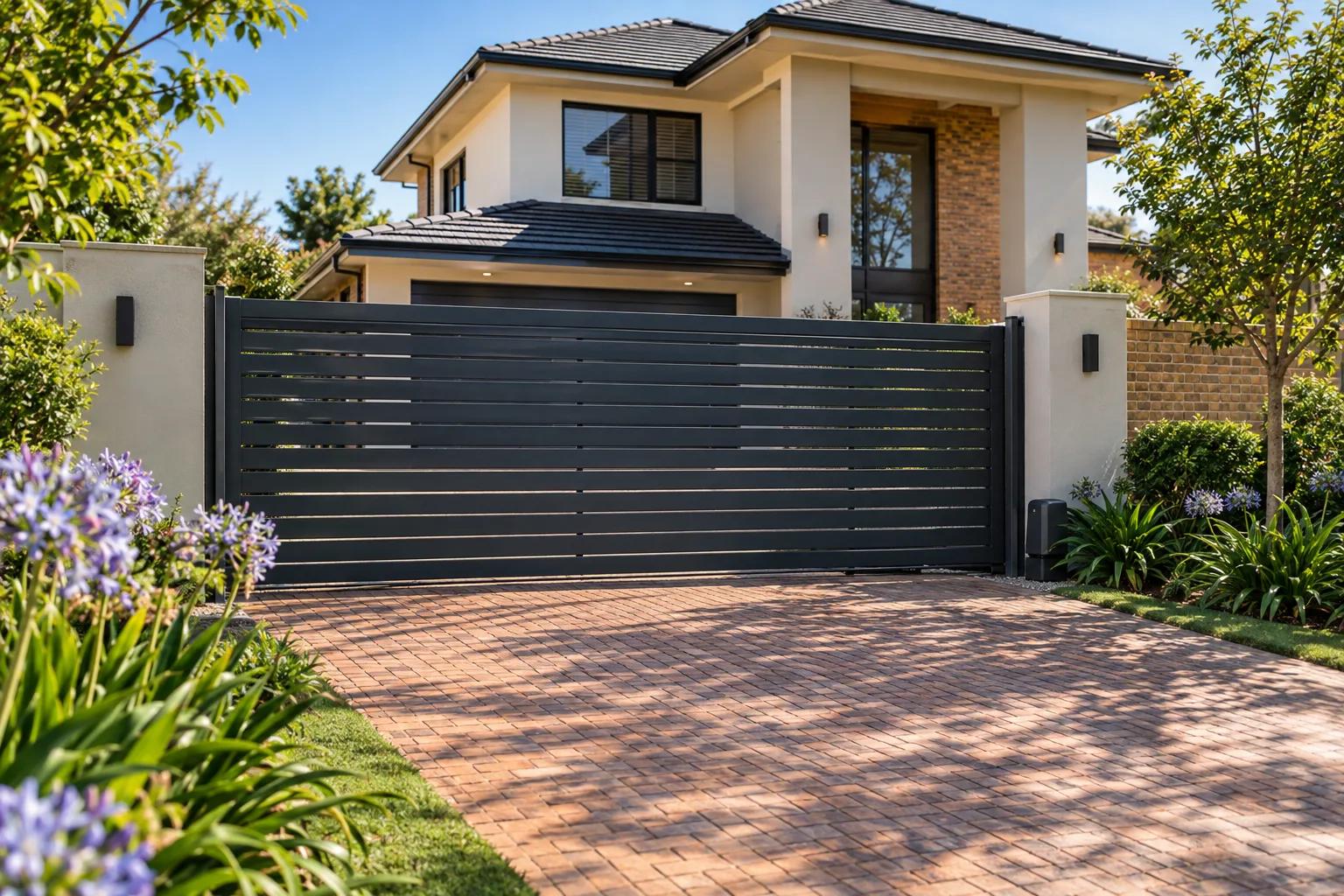

It's 2:15am, and the siren on the wall is screaming. You stand in the passage with your phone in your hand. The camera app shows the driveway, but the picture has been frozen since Tuesday. The intercom at the gate hasn't worked since the last storm, and the floodlight by the side passage blew in winter. Out in the dark garden, a flowerpot shatters.
What do security systems do?
Security systems are the electronic parts of your security: access control, intercoms, cameras, alarms, lighting and backup power. Together they decide who comes in, show you what happened, and warn you while there's still time to act. Each one covers a gap the others leave open, so they work best planned as one.
Key takeaways
- Access control, intercoms, fingerprint readers and boom gates decide who comes in, and let you remove a person's access the same day.
- Good camera placement covers the gate, each door and each side passage, and colour night vision shows faces after dark.
- Alarm zones, outdoor beams and pet friendly sensors warn you while someone is still outside, without false alarms.
- Security lighting helps a camera show a face instead of a shadow, and motion sensor lights show you when someone arrives.
- Backup batteries and solar keep the gate, the alarm, the cameras and the recorder running through a long power cut.
Access control: deciding who comes in
Access control decides who gets through your gate or door, and it works best when each person has their own way in. If your gate still opens for a remote nobody can account for, you're not alone. Many homes share one spare remote between the children, the domestic worker and the garden service, and nobody remembers who has it.
Access control works like a guest list. Each tag, code or fingerprint is a name on the list, and you can cross a name off the same afternoon.
Home access control can be as simple as a keypad and tags. Office access control adds a record of who came in and when. Access control for complexes often adds visitor QR code access, so guests get a code on their phone instead of a queue at the gate. Access control backup power keeps the gate working when the grid goes down.
A shared remote is a name you can't cross off, and it stays on the list for good.
Intercom systems: seeing who is at the gate
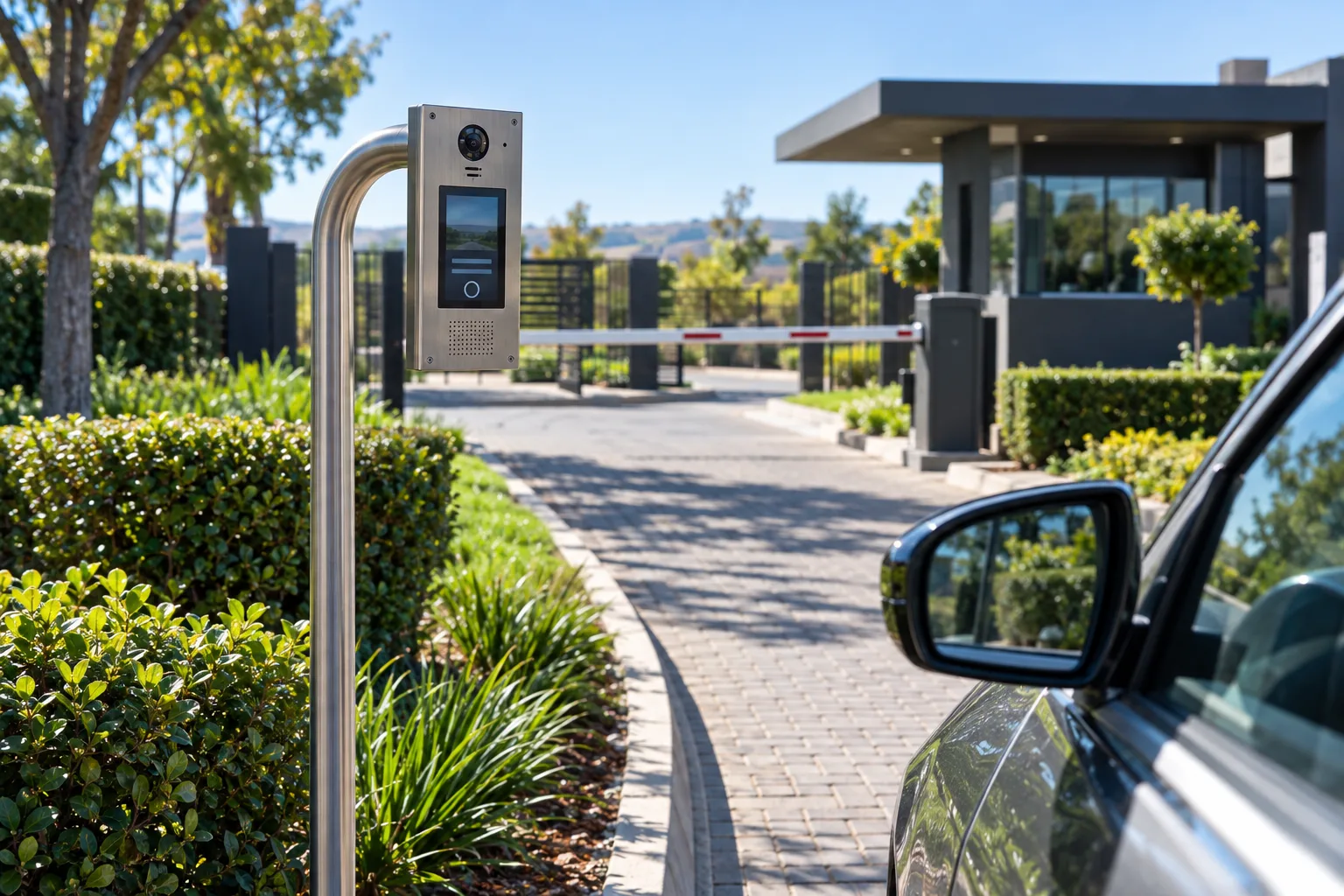
An intercom lets you see or hear a visitor before the gate moves. An audio intercom gives you a voice. A video intercom shows you a face, so you can tell the courier from a stranger before you press the button. A GSM intercom calls your phone instead of a handset in the house, so you can answer the gate from work. We fit Comb Mircell GSM intercoms.
A complex intercom system puts one panel at the gate with a button for every unit. An intercom gate opener lets each resident open the gate from a handset or phone.
At a Sandton estate entrance, we made a stainless steel gooseneck pedestal for a Hikvision video intercom and a camera. Then we set up remote viewing, so residents see visitors on their phones, wherever they are. Our intercom systems page shows the options.
When an intercom is not working, visitors stand at the gate pressing a dead button, and the courier drives off with your parcel.
Biometric access control: fingerprints and faces
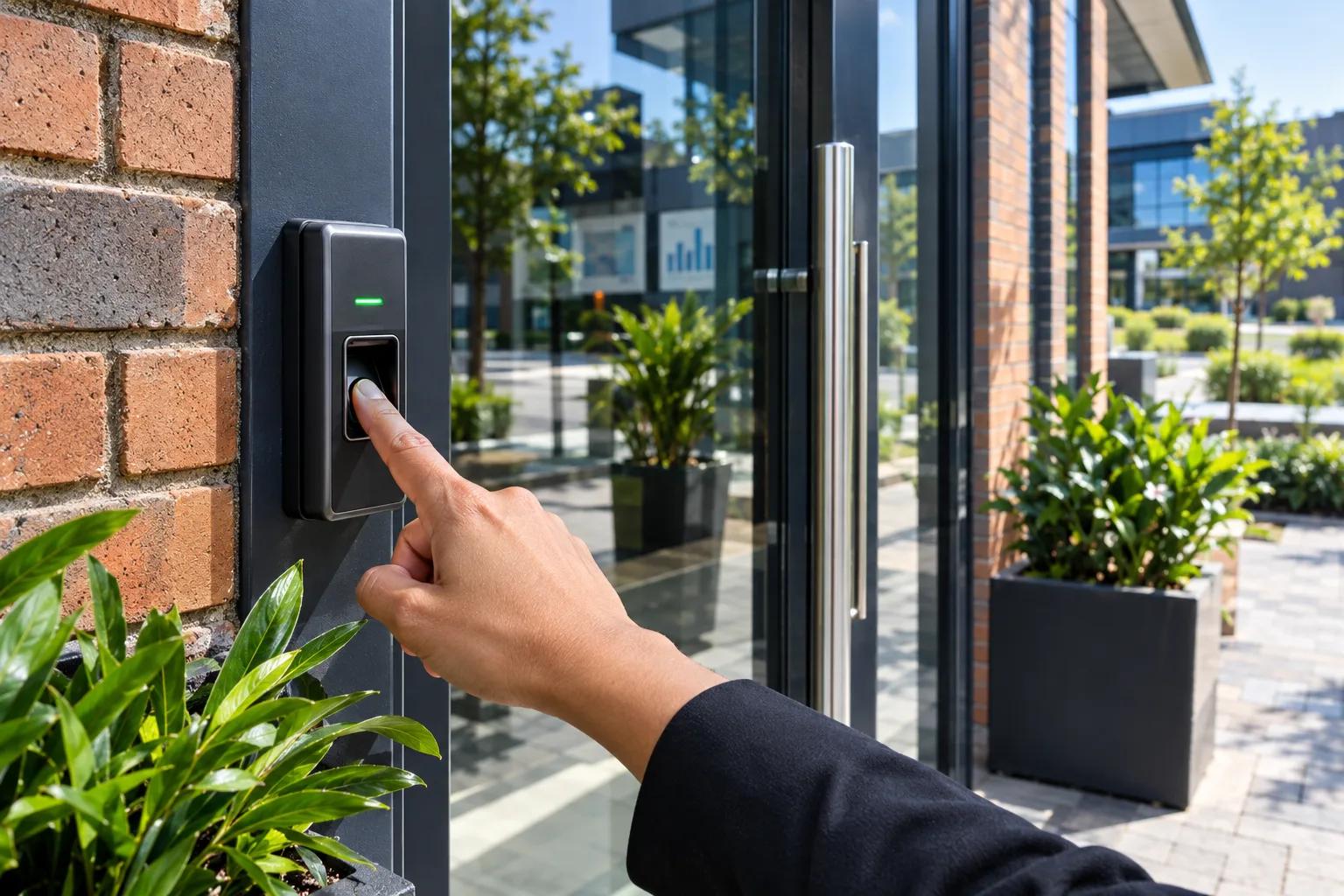
Biometric access control uses something nobody can lend out: a fingerprint or a face. A tag can be shared, copied or lost in a car park. A fingerprint walks in with its owner.
We install Suprema fingerprint and face readers at office doors, gates and staff entrances, and many also accept a card or a PIN. A face reader works without anyone touching it, which suits busy entrances. Each scan is logged, so a manager can see who came in at 6am and who left early.
Fingerprints and face scans are biometric information, which the Protection of Personal Information Act treats as special personal information. Estates and businesses need to handle them with extra care. The Information Regulator has proposed a code for gated accesses setting out how estates should handle visitors' details, footage and fingerprints. Our biometric access control page explains the readers we fit.
A tag handed to a friend works for the friend, every day, until somebody notices.
Boom gates and turnstiles: busy entrances
A boom gate lets one vehicle through at a time, and a turnstile does the same for people on foot. At a busy entrance, a gate left open for one car often lets a second car through behind it. The trick is called tailgating, and a boom closing straight after each car stops it.
Turnstiles suit factories, offices and sports clubs, where people come and go in numbers. Both keep a record of each entry, so a busy gate still knows who passed.
For the Dunkeld East Residents' Home Owners' Association, we installed Sector industrial boom gates, made by the South African gate motor company Centurion Systems, at four road closures. Beside them stand gooseneck pedestals with no-touch sensors and facial recognition cameras. Each boom lifts for one vehicle at a time, and the cameras record who came through. Our boom gates and turnstiles page covers both.
An entrance with no boom fills up at 7:30am and empties at 5pm, and nobody counts who stayed behind.
CCTV: seeing what happened, and when
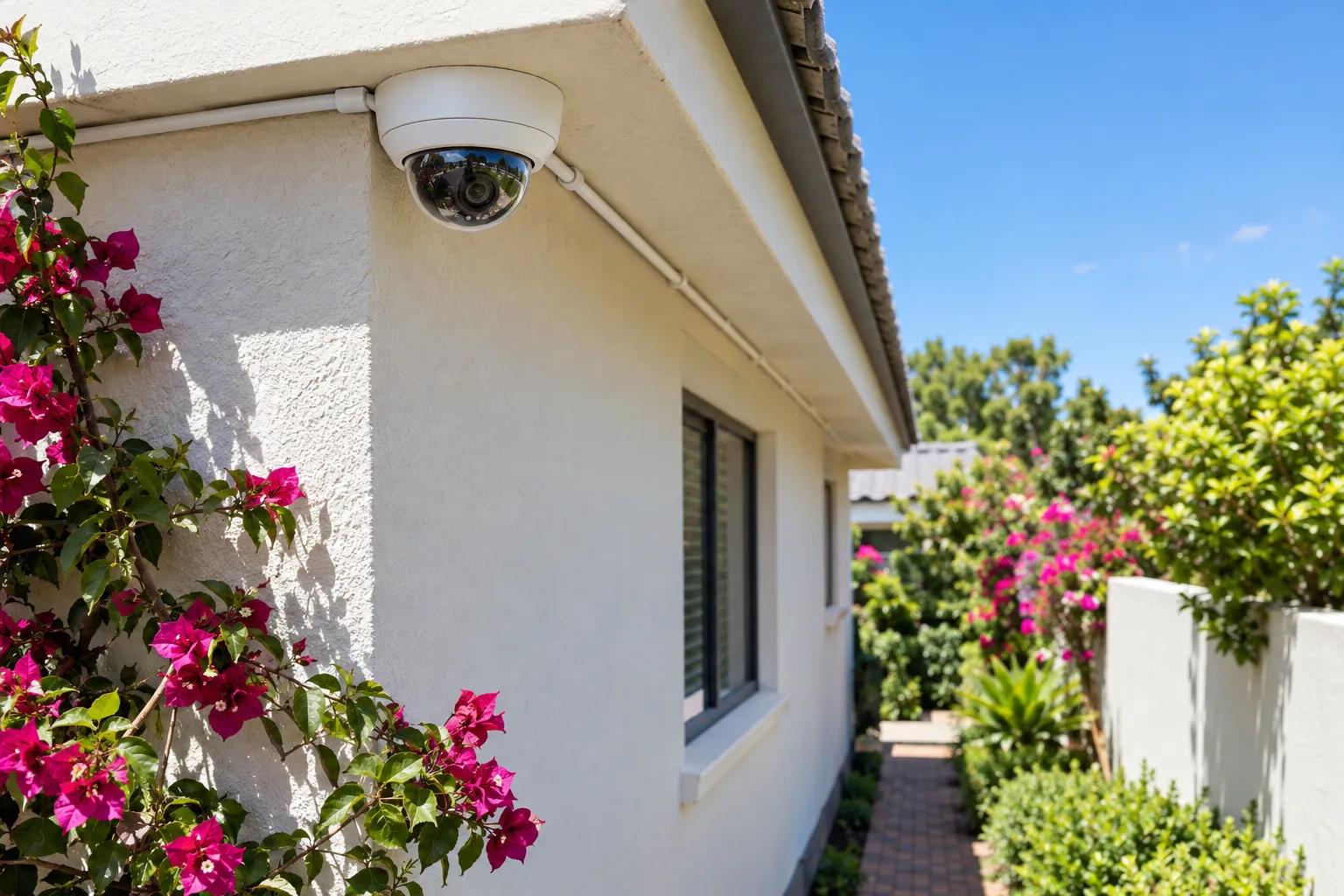
Where a camera points decides whether its footage helps you, far more than the price of the camera. Good CCTV camera placement starts at the gate and covers each door, side passage and low wall, at a height showing faces. Count the ways onto the property before deciding how many CCTV cameras you need.
For most homes, wired vs wireless CCTV is an easy choice: wired wins wherever a cable can reach, because it keeps recording when the Wi-Fi drops. A colour night vision camera keeps the picture in colour after dark, so you see the colour of a jacket or a car.
You can watch CCTV on your phone from anywhere with signal, and AI CCTV cameras alert you to people and cars instead of moving branches. CCTV recording storage decides how many days of footage you keep, so ask before you need it. We install Hikvision and Dahua cameras, and our CCTV page explains the options.
Police figures for January to March 2026 put house robbery 20.4% lower than a year earlier. Yet a break-in still starts at the corner no camera recorded. Check tonight. The recorder won't warn you before it records over the day you needed.
Alarm systems: the warning before the damage
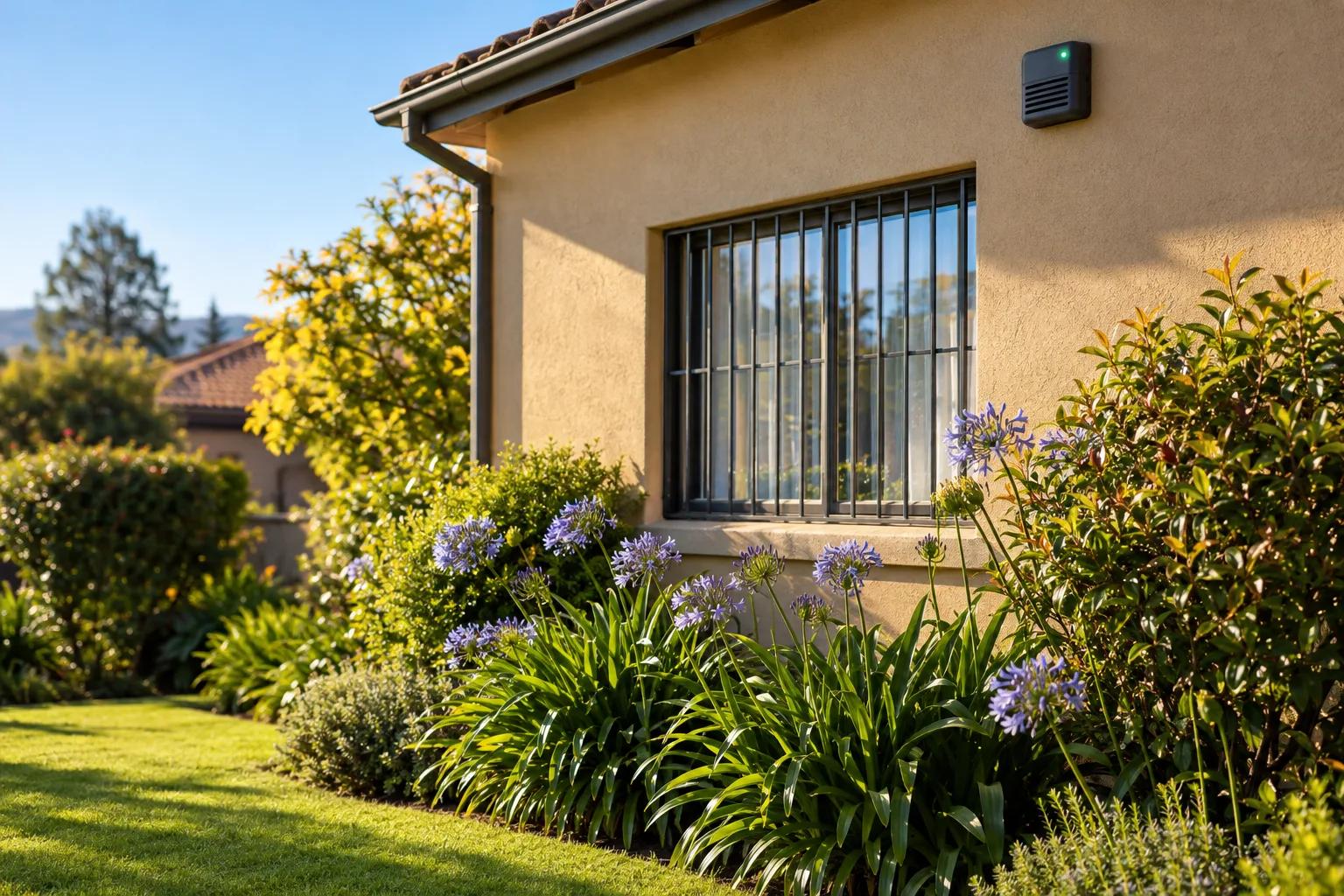
An alarm warns you when someone gets in where they shouldn't, and the best alarms warn you while the person is still outside. Every sensor belongs to a zone, so the alert names the garage door instead of only saying "alarm". Alarm zones also let you arm the garden at night while you sleep. A wireless alarm system fits an older house without cutting grooves into the plaster.
Outdoor alarm beams warn you while someone crosses the garden, and linking the alarm and electric fence puts the wall and the house on one siren. Pet friendly alarm sensors ignore animals below a set size: Ajax says its outdoor detectors can ignore animals up to 80 cm tall when set up correctly. An alarm app lets you arm the house from the car.
Before December, holiday home security means testing the siren, the alerts and the sensor batteries, and fixing any alarm beeping at the keypad. We install Ajax, Paradox and Jablotron alarms, and our alarm systems page shows what a site visit covers.
After the third false alarm in a week, the neighbours stop looking out of their windows.
Security lighting: no dark corners
Light does two jobs: it shows a camera a face, and it tells a visitor they've been seen. Lighting for CCTV needs care, because a floodlight aimed at a lens turns the picture into a white blur. Driveway lighting along the path from the gate to the door lets you see who is waiting before you step out of the car.
Motion sensor lights switch on the moment someone arrives, and dusk to dawn lights keep the corners lit all night. An LED floodlight gives bright light for little power, and solar security lights suit a far corner with no cable. Lights on a timer with no sensor tell anyone watching the street when the house is empty. Our security lighting page explains how we plan the lights with the cameras.
A dark side passage stays dark every night, and the only person who knows it is the one using it.
Solar: power for when the grid goes down
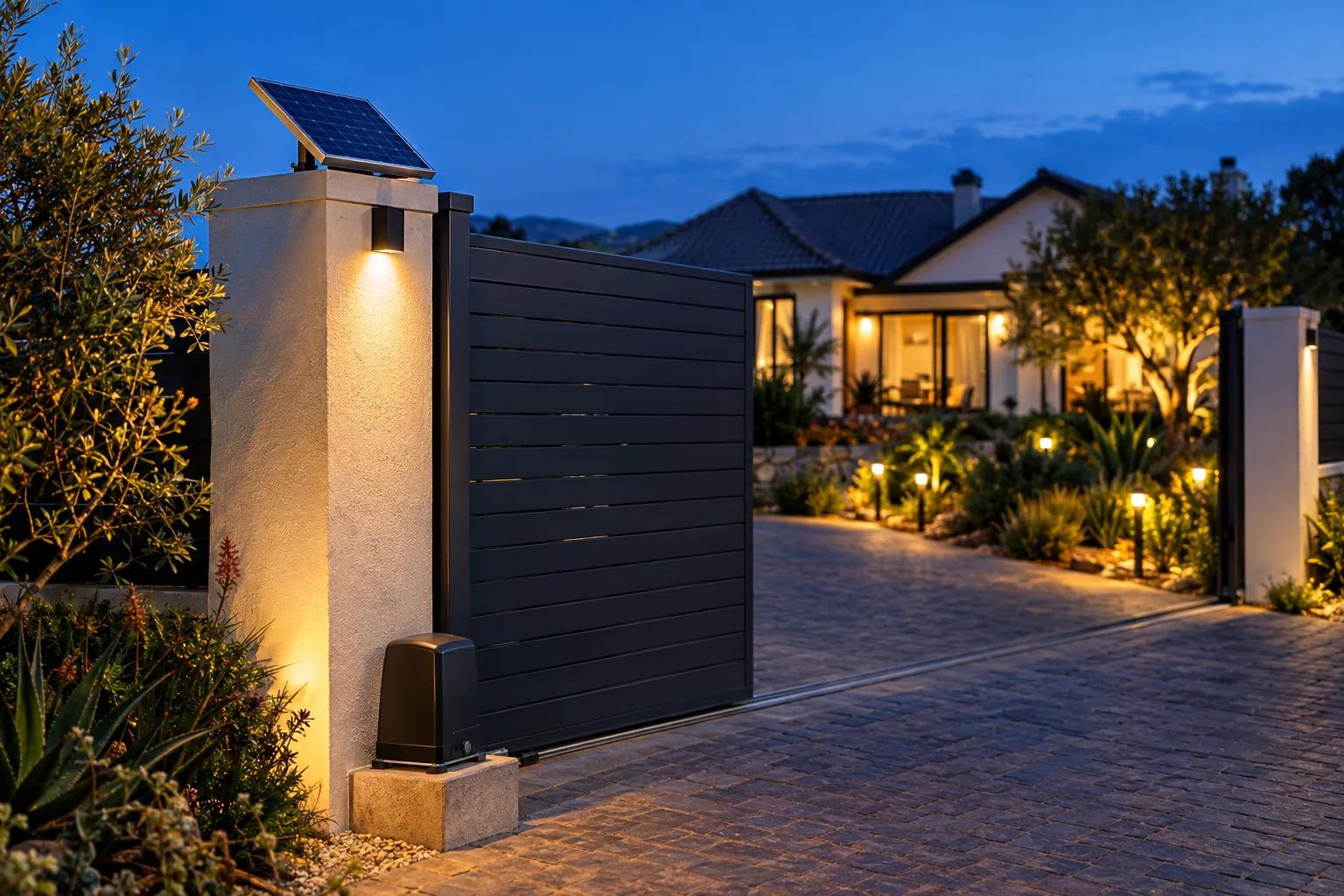
Every part of your security systems needs power, and a power cut tests every battery at the same time. Security system backup power decides what keeps working when the grid goes down: the gate, the alarm, the cameras and the recorder. Battery backup time depends on the battery's size and age, and on how often the gate opens during the outage.
A solar gate motor suits a gate far from the house, or a plot with no mains power. CCTV backup power keeps the recorder and cameras running, so the footage doesn't stop when the lights do. Choosing between lithium vs lead acid battery types comes down to lifespan and cost: lithium lasts longer, and lead acid costs less up front. Our solar page shows how we size panels and batteries for gates, alarms and cameras.
Four hours into a long outage, the gate motor clicks once and goes still.
Closing Reflection
Picture the same night a month from now. The siren stays silent, because the dog walks under the beam. A light clicks on at the side passage, and the camera sends a clear clip to your phone: a cat on the wall, in colour. The gardener's old tag stopped working the day he left.
When the power goes off at 9pm, the gate, the alarm and the cameras carry on. Upstairs, with the curtains drawn, you sleep through it all.
You shouldn't have to stand in a dark passage at 2:15am, listening to a flowerpot break outside. With Paul's Gates you won't.
Contact Paul's Gates to arrange a site visit and a written quotation for security systems at your home, complex or business.